About Suaeda calceoliformis (Hook.) Moq.
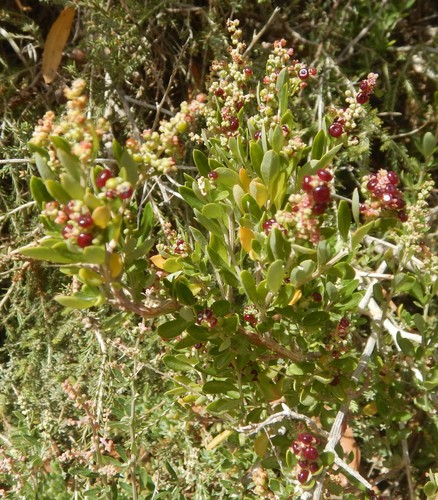
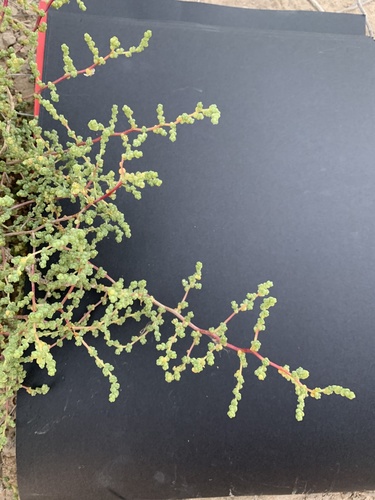
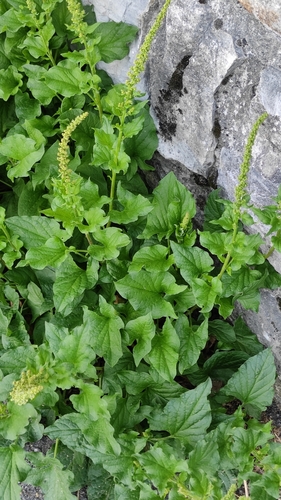
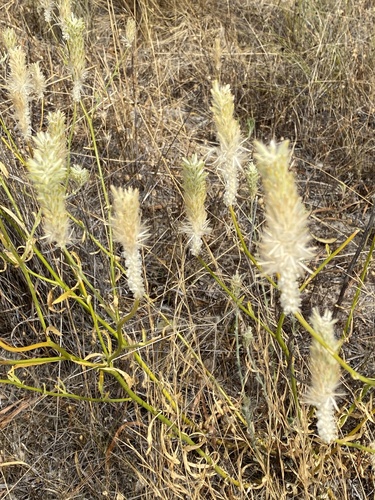
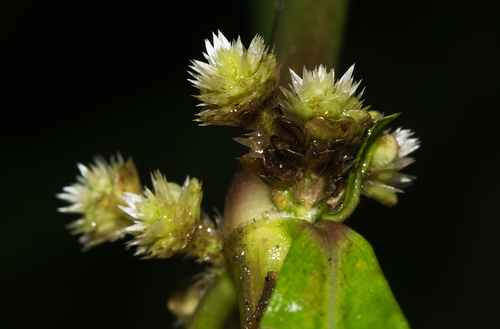
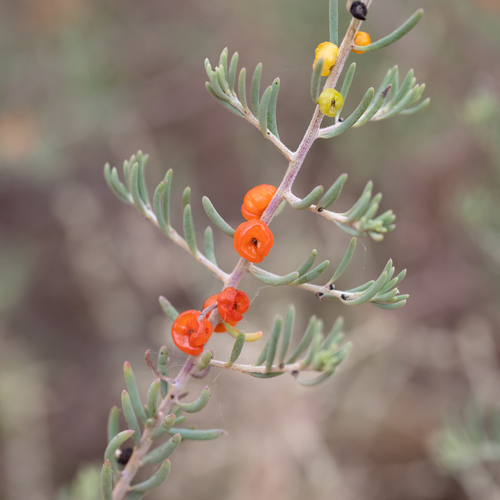
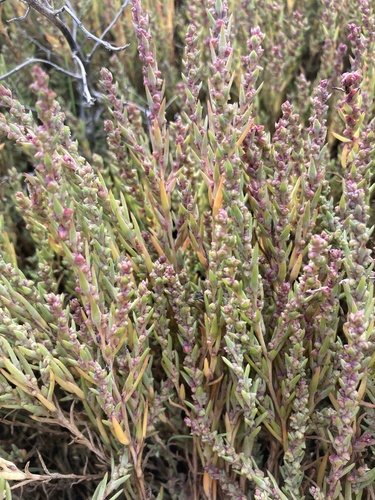
Suaeda calceoliformis is an annual herb. Its stems are waxy, range in color from green to red, and can be striped or bicolored, growing up to 80 centimeters long. Plants can grow either erect or prostrate; prostrate forms are more common on substrates with higher salinity, as they are able to retain more water. Its leaves are fleshy and waxy, reaching up to 4 centimeters long, linear in shape, and lie close to the stem rather than spreading outward. The inflorescence is an elongated cyme of flowers with the shape of a branching spike. It is dense, holding many tight clusters of flowers, with leaflike bracts growing between the clusters. Each cluster holds three to five individual flowers. Every flower has a calyx of horned sepals and no petals. The fruit is an utricle that develops inside the calyx. This plant is native to North America, and occurs across most of the continent, excluding parts of the Southeastern United States. It is a halophyte that grows in areas with high soil salinity and alkalinity, including environments such as playas, salt flats, beaches, marshes and other wetlands, and along the edges of roads that are salted during winter.