About Stylophora pistillata (Esper, 1792)
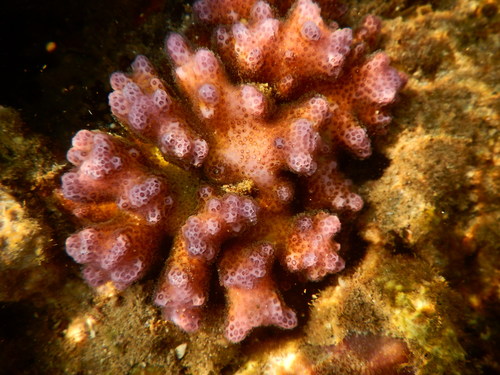
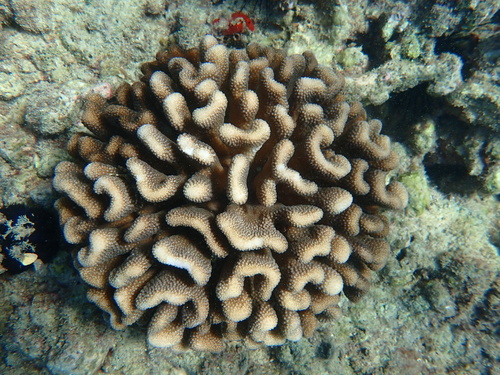
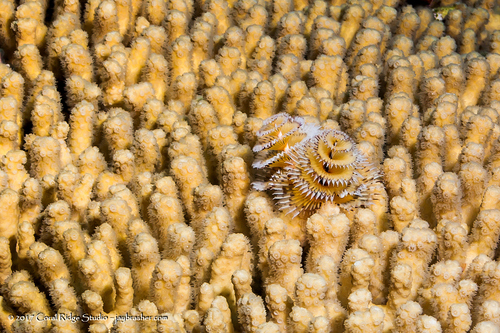
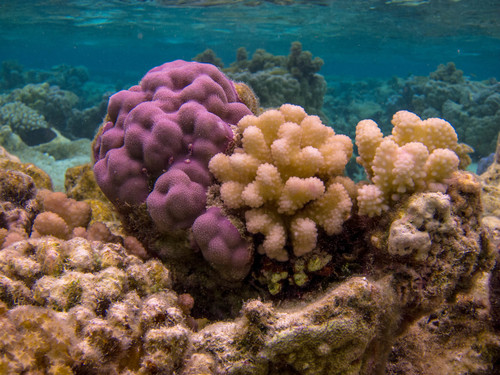
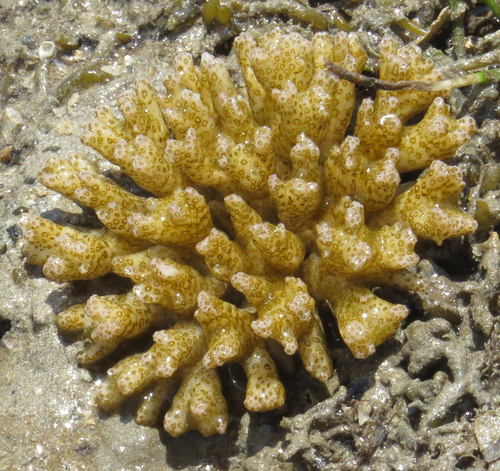
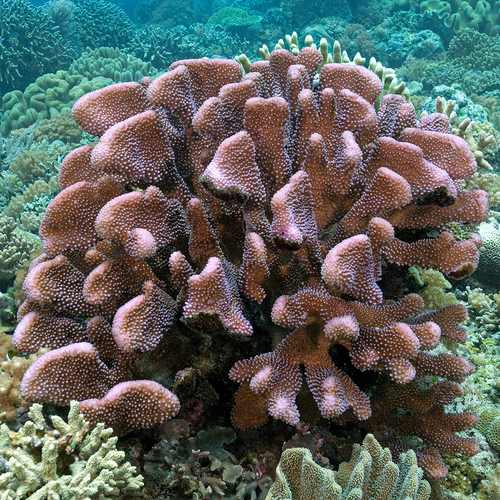
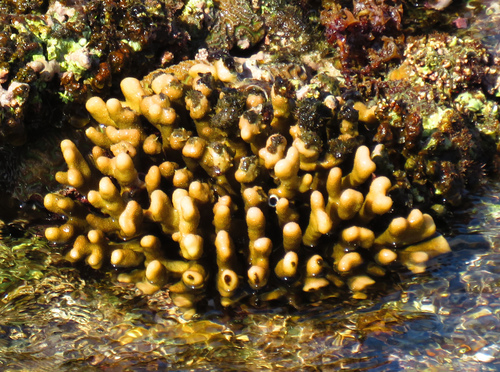
Stylophora pistillata, the species described here, has broad, blunt-ended branches. As colonies grow, they become thicker and more submassive in shape. The maximum diameter of a mature colony is approximately 30 centimetres, or 12 inches. Its corallites, the stony cups from which polyps emerge, are either conical or hooded, and are sunken below the colony's general surface. The columella, the central structure of the corallite, is solid and prominent. The septa, the stony plates that form the corallite wall, may fuse to the columella. There are six primary septa, and there are sometimes six additional secondary septa. Colonies of this species can be cream, pink, bluish, or green in colour. Stylophora pistillata has a wide distribution across the tropical and subtropical Indo-Pacific region. Its range extends from Madagascar, East Africa, the Red Sea and the Persian Gulf, across the Indian Ocean to northern Australia, Indonesia, the Philippines, New Guinea, Japan, and many island groups in the western and central Pacific Ocean. It is a reef-building coral that prefers exposed habitats with strong water movement, and can be found at depths down to around 15 metres, or 50 feet. Ecologically, this coral serves as a host habitat for gall crabs, Trapezia crabs, boring clams, date mussels, barnacles, Christmas tree worms, and damselfish. Some of these inhabitants, such as date mussels, are parasites that bore into the coral's structure and weaken its skeleton. By contrast, boring clams circulate fresh, oxygenated water into the coral colony, which provides a benefit to the coral.