About Stylidium debile F.Muell.
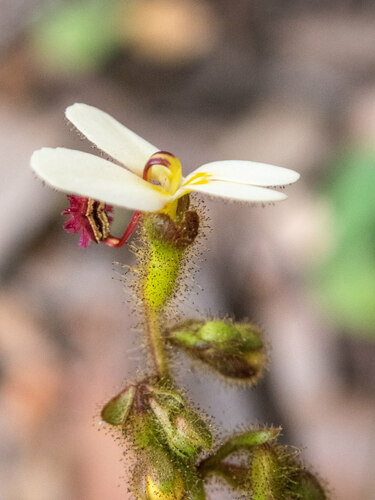
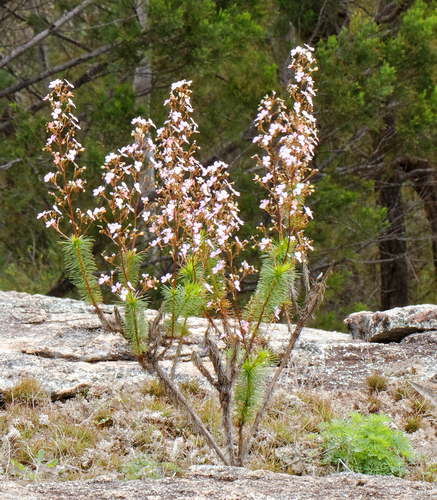
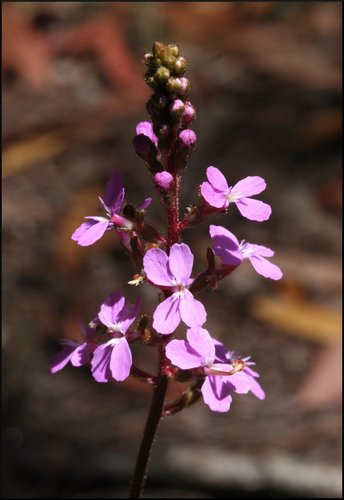
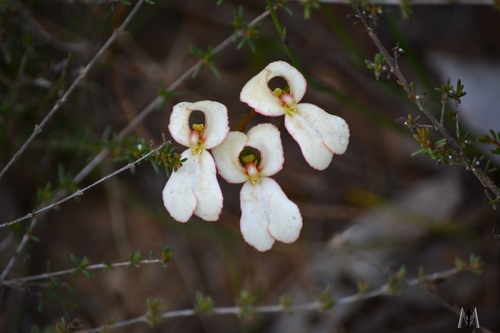
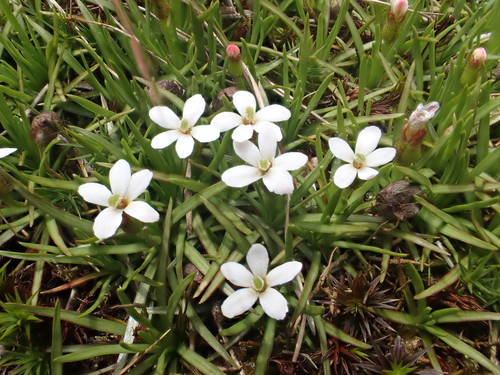
Stylidium debile F.Muell. is an herbaceous annual plant that grows 15 to 30 cm tall. It produces 20 to 200 oblanceolate or obovate leaves, which form a basal rosette; stems on this species may be absent or present. Individual leaves are generally 8–30 mm long and 3–7 mm wide. Each plant produces 1 to 2 glabrous scapes. Inflorescences are 10–25 cm long and bear pink flowers that bloom year-round within the species' native range. Historically, S. debile occurred across the Atherton Tableland, at Mt Playfair near Tambo, Queensland, and as far south as Alexandria Swamps in Sydney; it is considered probably extinct in all of these locations due to extensive habitat modification. More recent herbarium collections record its current distribution extending from Blackdown Tableland and Deepwater National Park in Queensland south to the area around Coffs Harbour in New South Wales. Its typical habitat is sandy or pale silty clay soils found on creekbanks or in swampy areas. Dominant plant species associated with its habitat are Melaleuca quinquenervia and Lophostemon suaveolens. S. debile is most closely related to S. paniculatum, but differs from that species in its inflorescence form and the presence of bracts. Its conservation status has been assessed as secure. This coastal species is one of the few Stylidium species available in cultivation, and is grown under similar conditions to tropical Australian Drosera. It is propagated by dividing vegetative clones that grow from its root system. While it is typically annual in its native range, it usually grows as a perennial in cultivation.