About Sturnia pagodarum (Gmelin, 1789)
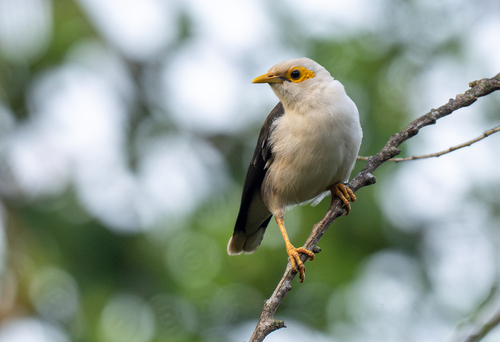
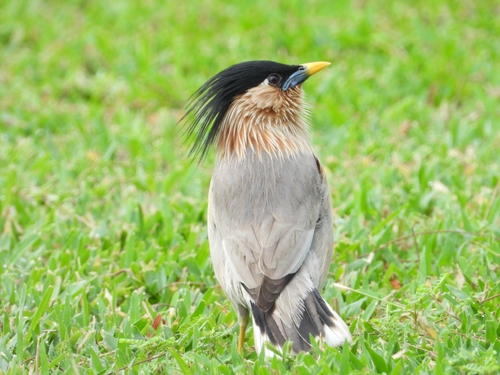
This species of myna has overall pale buff creamy plumage, with a black cap and a loose crest. Its bill is yellow with a bluish base. It has a pale iris and a patch of bluish skin surrounding the eye. The outer tail feathers feature white coloring, while the black primary wing feathers lack any white patches. Adult males have a more prominent crest than females, and also longer neck hackles. Juvenile individuals are duller in color, with a browner cap. The species epithet pagodarum is thought to refer to the species' frequent occurrence on buildings and temple pagodas in southern India. This is a resident breeding species in Nepal and India; it is a winter visitor to Sri Lanka, and a summer visitor to parts of the western and northeastern Himalayas. It has also been observed in the plains of Pakistan. Its call consists of long, musical notes, formed as a series of slurred phrases that end abruptly. While it is mainly found on plains, there are a small number of records of the species occurring above 3,000m, mostly in Ladakh. This passerine bird typically inhabits dry forest, scrub jungle, and cultivated land, and is often found close to human habitations. It especially favors areas with waterlogged or marshy ground. Like most starlings, the brahminy starling (Sturnia pagodarum) is omnivorous, feeding on both fruit and insects. It is known to feed on the fruits of Thevetia peruviana, which are toxic to many other vertebrates. This species is less arboreal than grey-headed mynas. It forms small flocks that mix with other species of myna on grass-covered ground, and sometimes forages near grazing cattle. It also visits flowers to feed on nectar, most commonly on flowers of Salmalia, Butea monosperma, and Erythrina. It roosts communally in large numbers in leafy trees, often sharing roosts with parakeets and other myna species.