About Strymon melinus Hübner, 1818
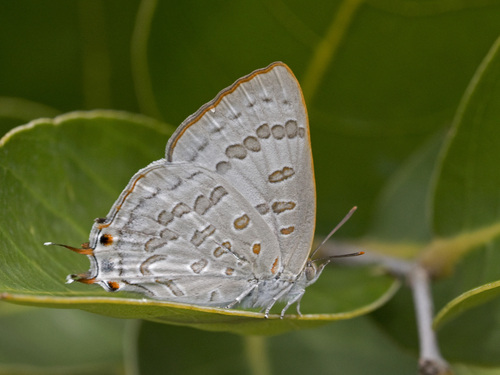
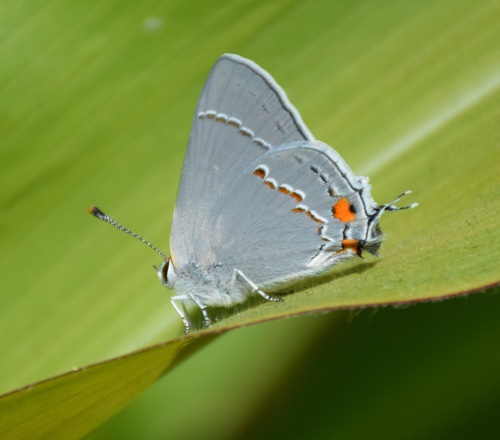
The adult gray hairstreak (Strymon melinus Hübner, 1818) has a wingspan of 20 to 32 millimetres, or 0.79 to 1.26 inches. The upper sides of its wings are gray, with an orange spot on the hind margin. The underside of the wings is a lighter gray, marked with white and black lines, plus orange and blue marginal spots near the tail-like extensions of the hindwings. These tail-like extensions twitch when the butterfly is at rest, which may imitate a separate head. This deception encourages predators to attack the wings instead of the insect's actual head, potentially allowing the butterfly to survive the encounter. Gray hairstreak caterpillars are green with side markings, and are covered in short yellow hairs. Like other caterpillars in the Lycaenidae family, S. melinus caterpillars are attended by ants in a symbiotic behavior called myrmecophily. This species lives across a very wide range of habitats, including tropical forests, mountains, temperate woodlands, meadows, cities, and farmland. Gray hairstreak caterpillars feed on a wide variety of food plants, but they primarily prefer mallows and legumes as host plants. They also commonly use clovers as food plants. Recorded food plants for the caterpillars include rabbit-foot clover (Trifolium arvense), white clover (Trifolium repens), bush clover (Lespedeza capitata), white sweet-clover (Melilotis alba), and round mallow (Malva neglecta). Young caterpillars usually eat the flowers and fruiting bodies of their host plant, while older caterpillars feed on the leaves.