About Strychnos nux-vomica L.
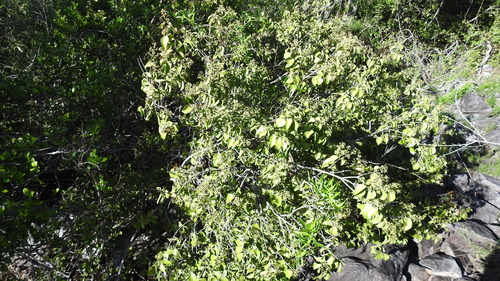
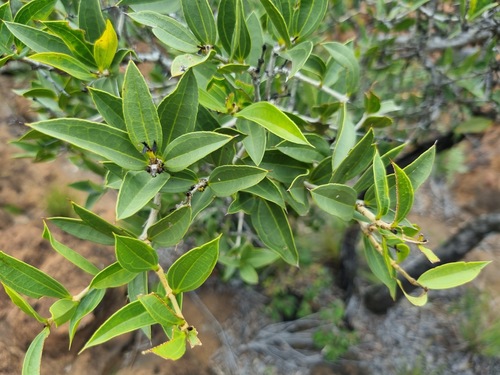
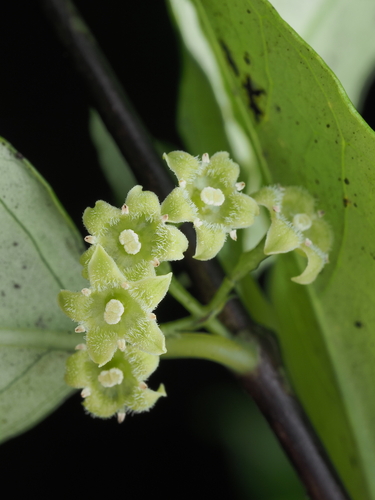
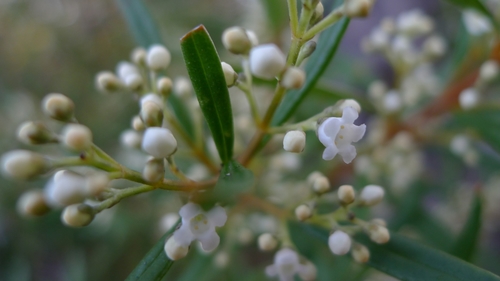
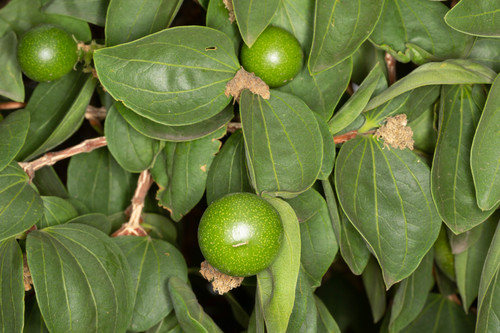
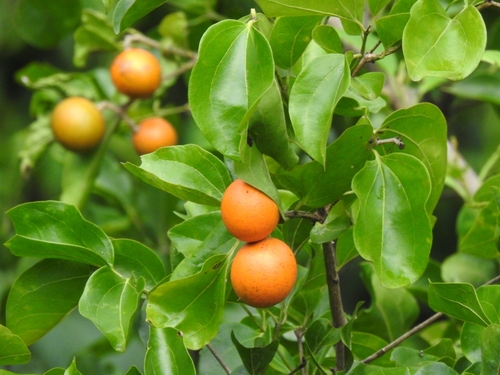
Strychnos nux-vomica L. is a medium-sized tree that can grow up to 20 metres (66 feet) tall. It has a short, thick trunk; its wood is dense, hard, white, and close-grained. Its irregular branches are covered in smooth ashen bark, while young new shoots are deep green with a shiny outer coating. Leaves are arranged in an opposite decussate pattern, meaning each opposing pair of leaves sits at right angles to the pair above and below it along the stem. Leaves are short-stalked, oval-shaped, shiny, and smooth on both sides, growing to around 10 centimetres (4 inches) long and 7.6 cm (3 inches) wide. Flowers are small, pale green, and funnel-shaped; they bloom during the cold season and have an unpleasant foul odor. Ripe fruit are roughly the size of a large apple, with a smooth, hard shell that develops a soft orange color when mature. The fruit’s flesh is soft, white, and jelly-like, holding up to five seeds each covered in a soft, woolly coating. Seeds are shaped like flattened disks, and are completely covered in hairs that radiate out from the center of their sides, giving the seeds a very distinct characteristic sheen. Seeds are very hard, with a dark gray, horny endosperm that encloses the small embryo. The seeds have no odor but have an extremely bitter taste. In its ecology, monkeys and birds eat the soft pulp of this tree’s fruit, including the Malabar pied hornbill, a confirmed hornbill species that feeds on it. The seeds contained in the tree’s round, green to orange fruit are a major source of the highly poisonous, intensely bitter alkaloids strychnine and brucine. Seeds hold approximately 1.5% strychnine by content, while dried blossoms contain 1.0% strychnine. The tree’s bark also contains brucine and other poisonous compounds. Strychnine-containing seeds from this tree have historically been used to make arrow poison. Today, strychnine use is highly regulated in most countries, and it is most commonly used in baits to kill feral mammals. Most accidental poisonings from this plant occur from breathing in strychnine powder or absorbing the toxin through the skin.