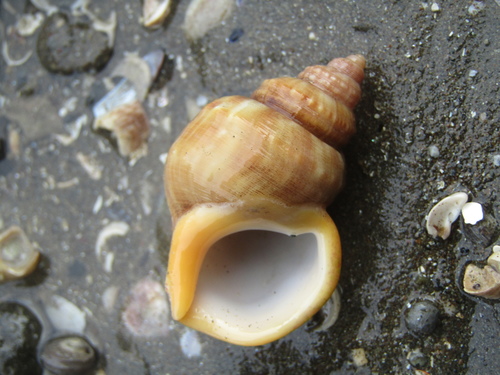
About Struthiolaria papulosa (Martyn, 1784)
Struthiolaria papulosa (Martyn, 1784) has an average body length of 77 mm, an average body volume of 26.9 cm³, and an average wet body mass of 47 g. Its shell is coiled dextrally. The small, cone-shaped upper portion of the shell, called the protoconch, is formed by two whorls and covered with fine, closely spaced lines. The shell aperture is oval, with thick, flared, wavy lips that have a thickened area at the top of the opening. This species is native to New Zealand, and also occurs along parts of the south and east coasts of Australia. In New Zealand, it is found along the coasts of both the North Island and the South Island. It prefers shallow salt water, or sand flats on either sheltered or open coasts. Its life cycle is divided into four stages: egg, larva, juvenile, and adult. Adult Struthiolaria papulosa release sperm and eggs into the water, a process that can take up to one hour. Fertilization is external, after which fertilized eggs begin development. A larval shell begins to form 9 to 10 hours after fertilization, and approximately three days after fertilization, larvae develop into juvenile sea snails. The species has an average lifespan of 5 years, and individuals can live up to 25 years. While the evolutionary origin of this snail is not clear, Struthiolaria errata is thought to be a possible ancestor.