About Strongylura marina (Walbaum, 1792)
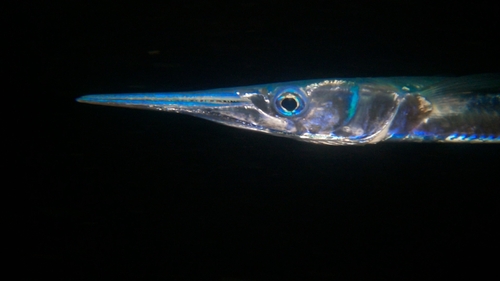
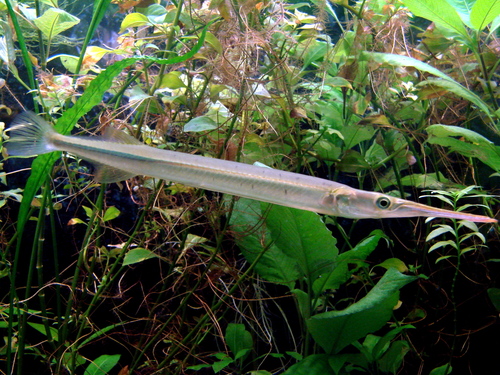
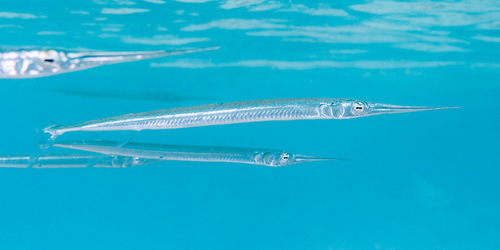
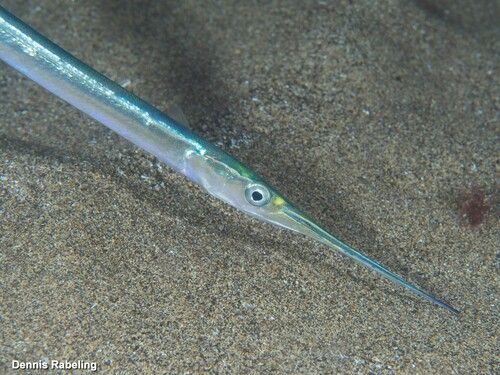
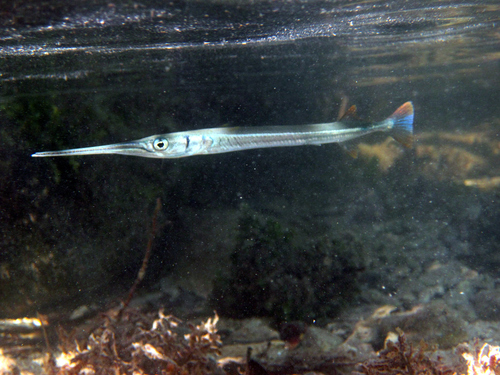
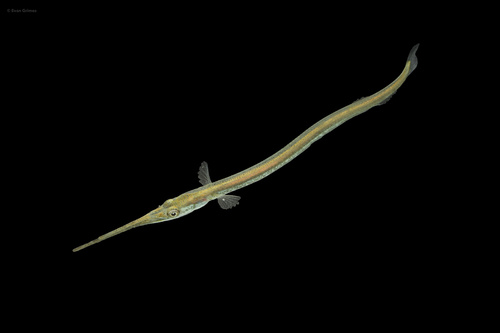
The Atlantic needlefish (Strongylura marina, first described by Walbaum in 1792) is a common demersal needlefish species that frequently occurs in marinas and other areas with minimal currents. Its body is very elongated and rounded, with extremely elongated jaws that form a long beak. It has numerous needle-like teeth, and the rear of its upper jawbone is exposed when the mouth is closed. This species lacks gill rakers, and its fins have no spines. Low lobes are present at the front of both the dorsal and anal fins. The dorsal fin contains 14–17 rays, the anal fin contains 16–20 rays, and the pectoral fins contain 10–12 rays each. Atlantic needlefish are native to western Atlantic coastal waters ranging from Maine to southern Brazil, including coastal areas of the Gulf of Mexico and the Caribbean Sea. They are not restricted to saltwater: they occur in various estuaries and can move well upstream into fresh water for short periods, and can tolerate a wide range of salinities up to a maximum of 36.9 ppt while regularly entering fresh water. They are associated with open water columns, estuaries, and reefs. In the Chesapeake Bay, they occupy shallow waters with a maximum depth of 5 feet. In Texas, they inhabit the Sabine Lake (including minor coastal drainages west to Galveston Bay), Galveston Bay (including minor coastal drainages west to the mouth of the Brazos River), Brazos River, Colorado River, San Antonio Bay (including minor coastal drainages west from the mouth of the Colorado River to the mouth of the Nueces River), and Nueces River. This species has been introduced to and now inhabits parts of the Tennessee River drainage across Alabama and Tennessee. In terms of ecology, juvenile Atlantic needlefish have a diet that is 70% shrimp, mysids, and amphipods, and 30% fish, while adults feed exclusively on other fish. Predators of S. marina include larger piscivorous fish such as the Atlantic tarpon (Megalops atlanticus). Less common predators include the common bottlenose dolphin (Tursiops truncatus) and juvenile lemon sharks (Negaprion brevirostris). Because Atlantic needlefish swim near the surface, they are also preyed on by some bird species. Competitors of the Atlantic needlefish include similar-sized piscivorous fish like bonefish.