About Streptopelia decipiens (Hartlaub & Finsch, 1870)
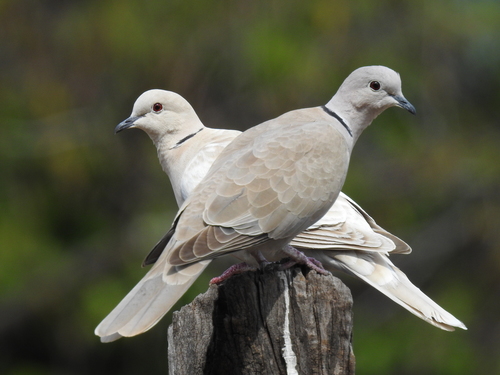
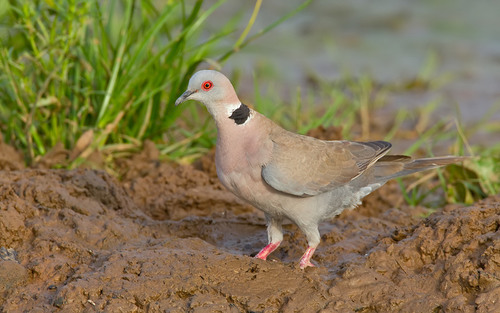
The Mourning Collared Dove is a medium-sized, stocky pigeon that reaches up to 32 cm in length. Its body is often black, with broad, pointed pale brown wings. It has a grey head, pink underside, and pale grey shading on the belly. It has a black hind neck patch edged with white, and both its legs and the patch of bare skin around its eye are red. In flight, it displays dark-colored flight feathers and extensive white coloring in the tail, a feature that distinguishes it from the similar but larger red-eyed dove. Males and females look similar, but immature doves are duller in color than adults and have scalloping on their body feathers. Mourning Collared Doves typically mate monogamously, and the timing of their breeding season depends on location. Breeding occurs from December to June in Sudan, September through October in Chad, and can take place any month of the year in other regions. After breeding, doves build a stick nest in a low tree branch or bush, preferring sites closer to the ground, often in mangroves. They lay a clutch of two white eggs, and both the male and female incubate the eggs for fifteen days.