About Streptopelia capicola (Sundevall, 1857)
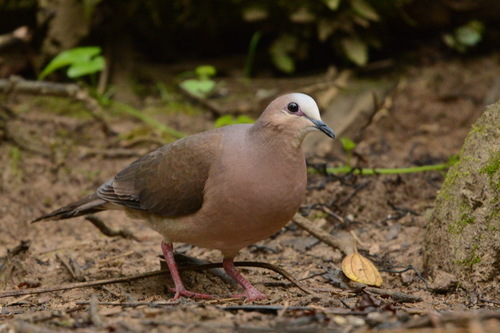
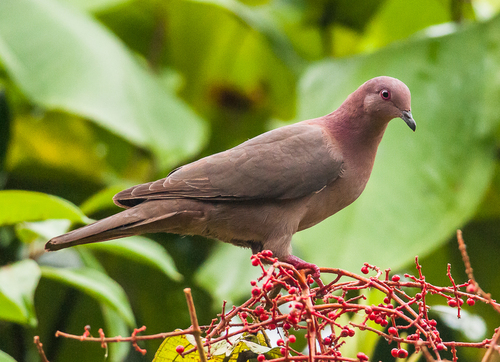
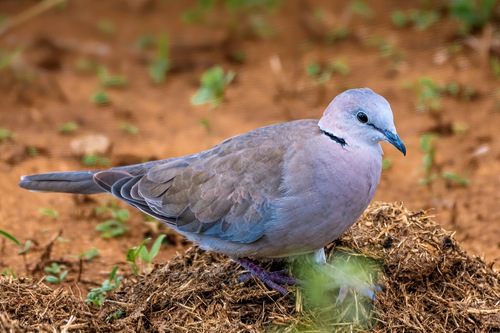
The body feathers of Streptopelia capicola are darkest on the upper side, and are colored in dull grey and brown tones, with lavender shades on the nape. Their underparts are paler, and a pinkish lavender tint is usually present here. The lower belly and crissum (the undertail coverts surrounding the cloaca) are white. Like related species, their otherwise slate grey tail feathers have white fringes and conspicuous white tips. This tail pattern is particularly noticeable during display flight. Individual plumage of this species has high variation, with some individuals being light and others almost sooty. Males and females have similar appearances, although males are slightly larger. Adults measure 25–26.5 cm (9.8–10.4 in) in length and weigh 92–188 g (3.2–6.6 oz). Their eyes are almost black, the bill is black, and the feet are dark purple. Immature Streptopelia capicola have duller plumage, and lack the adult semi-collar. They also have buff edges on all upper body and wing covert feathers, while their underplumage is broadly edged with greyish-white. This species occupies a diverse range of habitat types, including semi-desert scrub, Boscia and Acacia savannah, a variety of woodland types, farmlands, open plantations, and alien acacia thickets. Only closed forest or plantations, or the extensive waterless dune fields and gravel plains of the Namib are unsuited to its habitat requirements. In southern Africa, it is most commonly observed in fynbos regions, miombo and mopane woodlands, as well as all grassland types from moist to dry regions. Tree planting in groves, for example around farm homesteads, has helped this species become established in these grassland areas. Streptopelia capicola are vulnerable at exposed waterholes (where they are preyed on by lanner falcons) and in plantations (where they are preyed on by black sparrowhawks). Additional predators of this species include reptiles, wildcats, jackals, genets, herons, storks, eagles, and barn owls. Their nests are vulnerable to birds, snakes, and introduced eastern grey squirrels in Cape Town. Seasonal movements of this species are most noticeable in tropical areas, while nomadic movements occur in arid environments with limited resources. They seldom occur at elevations above 2,000 metres. Streptopelia capicola feed mainly on seeds, including those of grasses, cereal grains, lupins, milkweeds, alien acacias and pines. They also eat broken fruit and berries from oaks, gums, currants and Lantana, and occasionally eat insects such as earthworms, termites, weevils, and others. Other recorded food items for this species include small sedge bulbs, fleshy succulent leaves, aloe nectar, and sugary aphid secretions.