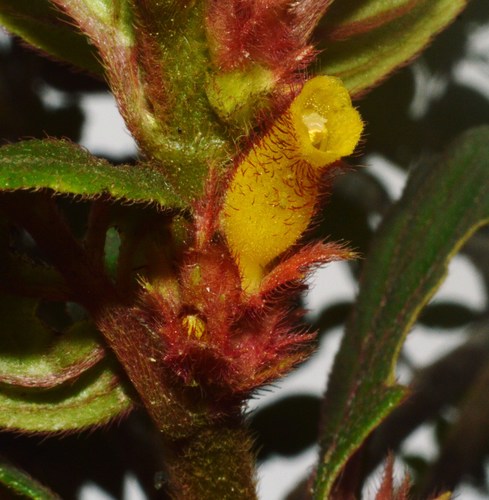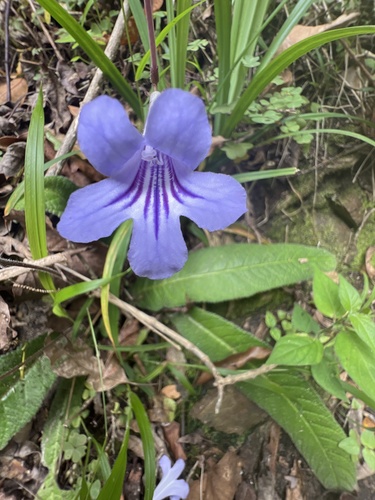
About Streptocarpus rexii (Bowie ex Hook.) Lindl.
Streptocarpus rexii (Bowie ex Hook.) Lindl. is a South African species in the plant family Gesneriaceae. It grows widely across a range starting from the southern Cape, extending along coastal hills, mountains, wooded ravines and valleys, and the moist east coast forests, through KwaZulu-Natal, and reaching as far north as Mpumalanga. It can be found up to an elevation of approximately 900 m. The Streptocarpus genus, which contains around 130 species of epiphytes and lithophytes, is distributed mostly across Africa and the Mascarene Islands, with just four vagrant species found in Asia. Like other Old World members of Gesneriaceae, Streptocarpus displays the unusual trait of anisocotylous, or unequal, growth, meaning one cotyledon continues to grow after germination. In 1818, James Bowie, a botanical collector working for Kew, first collected specimens and seeds of this plant near Knysna, on the estates of George Rex. He sent the material to Kew and requested the plant be named in honor of George Rex. William Jackson Hooker subsequently described and named it Didymocarpus rexii. John Lindley did not agree with Hooker's classification, so he established a new genus and renamed the species Streptocarpus rexii when he published plate 1173 in the 1828 edition of The Botanical Register. Botanist Gustav Heynhold also reclassified the species, publishing it as Henckelia rexii Heynh. in Nomenclator Botanicus Hortensis in 1840. Streptocarpus rexii is a stemless herb that reaches a height of around 15 cm (6 in), and forms a rosette of velvety, strap-shaped leaves that can grow up to 30 cm (12 in) long. Each leaf grows separately from the plant's base, developing into an individual plant with its own roots and inflorescence. Its fruit is a spirally twisted two-valved capsule that releases tiny seeds when it reaches maturity. Because of this species' showy flowers, it was used as a parent for extensive hybridization starting in 1886, which produced a large number of hybrid descendants with larger flowers and a wider range of flower colors. Both S. rexii and its hybrids do not require intensive care to grow in European and United States gardens, which has made them consistently popular. Their tolerance of dry conditions makes them ideal for hanging baskets in greenhouses. Like members of Streptocarpus sect. Saintpaulia, this species propagates easily from leaf cuttings. Leaf cuttings are best collected in spring and early summer, and can be grown in any sterile growing medium as long as the medium has good drainage. When stressed by cold or prolonged drought, leaf tips will discolor and break off along abscission lines. Overwatering, on the other hand, encourages fungal growth. Sterols, organic acids and phenols have been detected in the rhizomes of Streptocarpus rexii.