About Strauzia longipennis (Wiedemann, 1830)
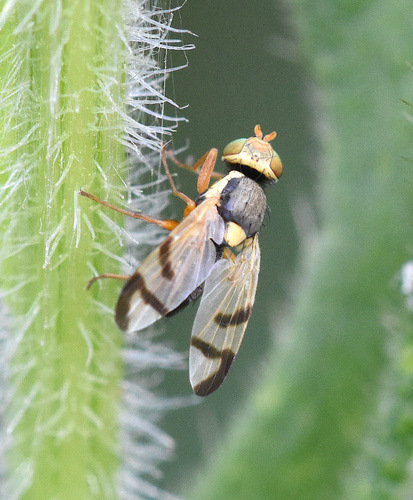
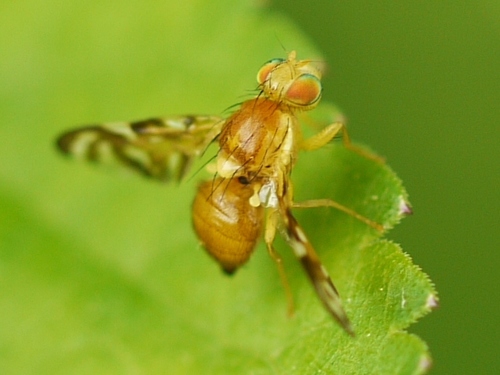
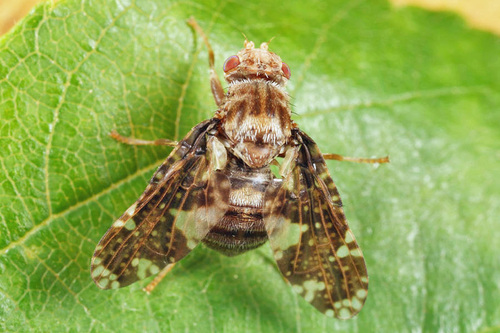
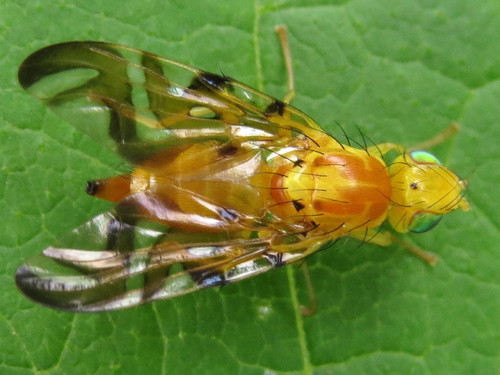
Strauzia longipennis, first described by Wiedemann in 1830, is a large species of tephritid fruit fly with the common name sunflower maggot. It is classified as a minor pest; its larvae mine the stems of sunflowers, plants in the genus Helianthus. Damage caused by larval feeding on spongy stem tissue is typically light. Unlike larvae of some other fruit fly species, Strauzia longipennis larvae do not damage sunflower flower heads or seeds. Adult Strauzia longipennis are roughly 6 mm long, with a wing length of approximately 7 mm, which is considered reasonably large for a tephritid. Their bodies range from yellow to orange, and their wings carry orange to brown bands that usually form a distinct F-shaped marking near the wing tip. The larvae of this species are yellowish-white, and grow to a length of about 5 mm. They spend around 30 days feeding inside their host plant, then overwinter as pupae in the base of the plant or in surrounding soil. Adult flies can be found between May and August, with timing varying by location. Two other tephritid fly species are also referred to as sunflower maggot: Gymnocarena diffusa, whose larvae feed within the sunflower flower head, and Neotephritis finalis, commonly called the sunflower seed maggot, whose larvae feed on developing sunflower seeds.