About Stramonita biserialis (Blainville, 1832)
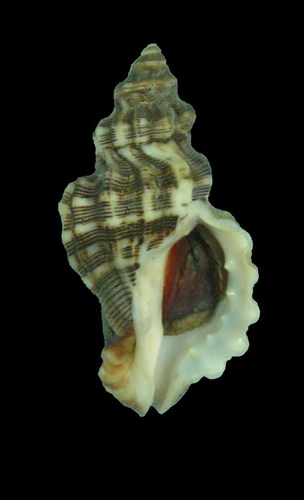
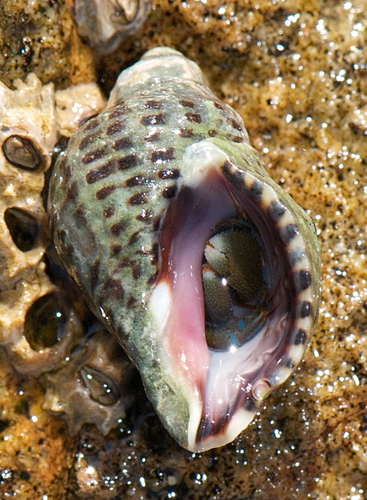
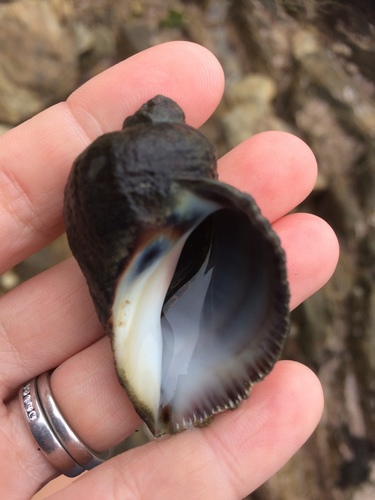
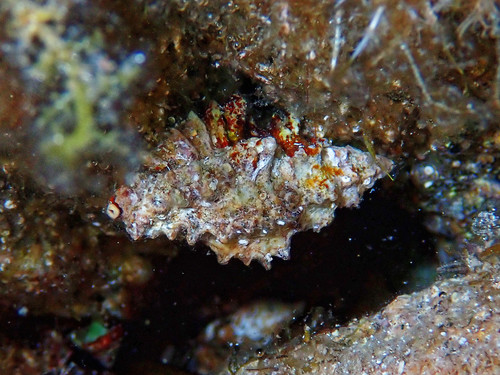
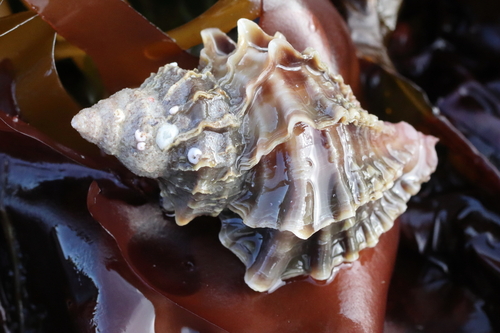
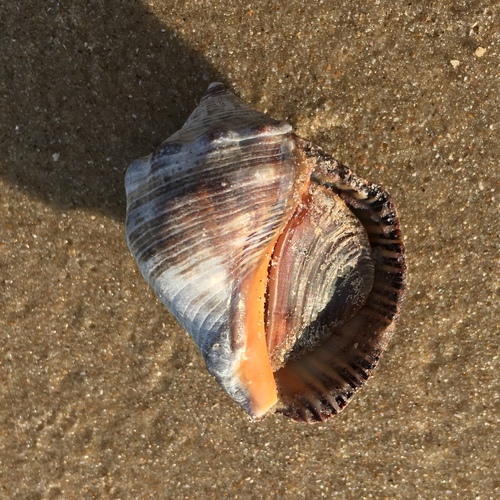
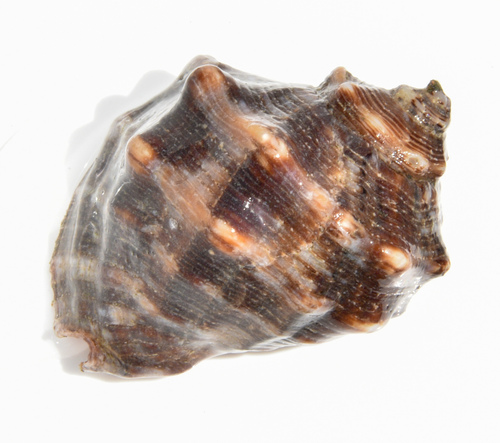
Stramonita biserialis is a fairly small species; adult shells are typically 4 to 6 centimeters long, though their exact size varies with age. This species lives in both the upper and lower intertidal zones, and has developed distinct morphological adaptations to the different conditions found in each area. For the strong wave action of the wave-exposed lower intertidal, S. biserialis grows more streamlined shells with thinner walls, a larger shell aperture, a larger foot area, stronger attachment strength, and a higher metabolic rate. The streamlined shape reduces the impact of hydrodynamic force, while thinner shell walls let the snail spend less energy building extra shell structure that is not needed for defense, as predators mostly remain in the upper intertidal. A larger operculum and larger foot area give S. biserialis much stronger attachment to its substrate, which likely explains its correspondingly higher metabolic rate. In the predator-rich upper intertidal, S. biserialis grows a thicker, smaller, more rounded shell with a smaller aperture, making it harder for predators to break through. The distribution of Stramonita biserialis extends from the Gulf of California to the northern coast of Chile.