About Stoeberhinus testaceus Butler, 1881
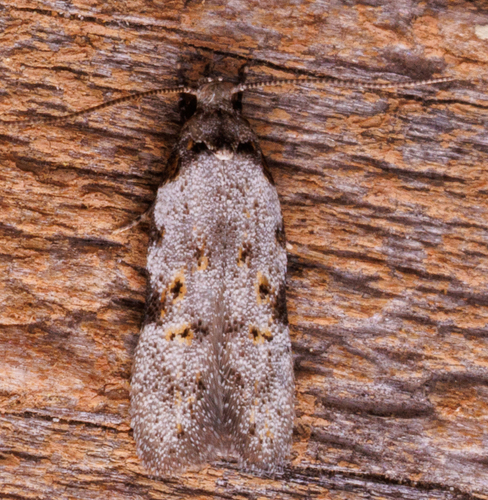
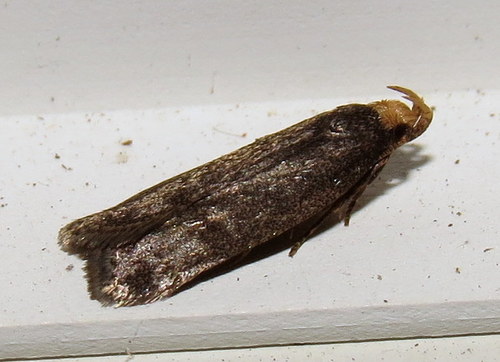
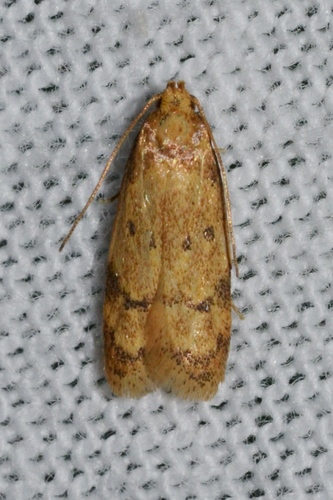
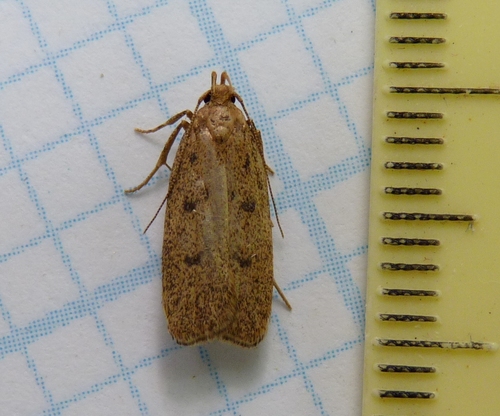
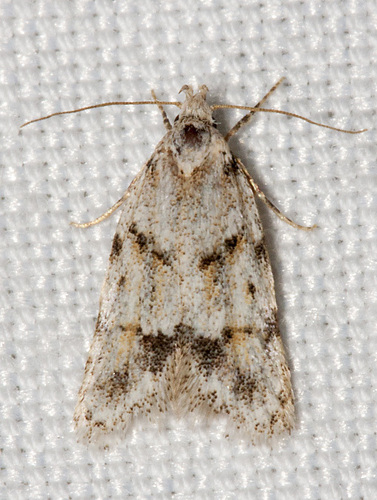
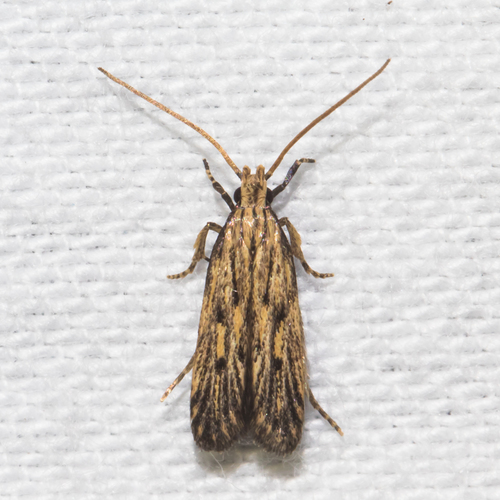
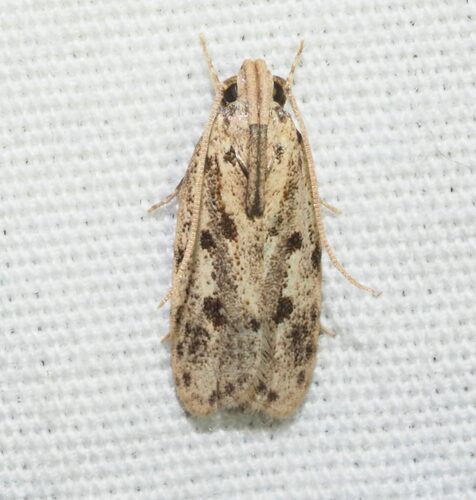
Stoeberhinus testaceus, commonly called the potato moth, is a gelechioid moth. It is generally treated as the only species in its genus Stoeberhinus, though the genus may also hold some related moths that are currently placed in the genus Autosticha. This species belongs to the subfamily Autostichinae, which is classified either in the concealer moth family (Oecophoridae), or in an expanded family Autostichidae. It is a small moth, with forewings mottled in buff and brown, a color pattern matching that of a potato. Similar to moths of the genus Autosticha, the second and third forewing veins of S. testaceus emerge from a common stalk. The species differs from Autosticha, however: the labial palps of male S. testaceus are covered in feathery hairs, while the labial palps of females are inconspicuous and do not taper, unlike the tapering labial palps seen in both sexes of Autosticha. This moth is common and widespread across warmer parts of the Pacific region. It was first described by Arthur Gardiner Butler in 1881, based on specimens collected in Honolulu, Hawaii. Since its original description, the species has also been recorded from Java, the New Hebrides, Fiji, Samoa, the Cook Islands, the Marquesas Islands, across the Society Islands and Tuamotu Islands to the Austral Islands, and from the Galápagos Islands — though it may not breed in the Galápagos. The species' origin is not well understood, and it appears to be a so-called "supertramp species". The caterpillar larvae of S. testaceus feed on a wide range of dry leaves, where they construct silken tunnels. Larvae have also been recorded feeding on living plants of the looking-glass mangrove Heritiera littoralis, though the significance of this record is not currently known.