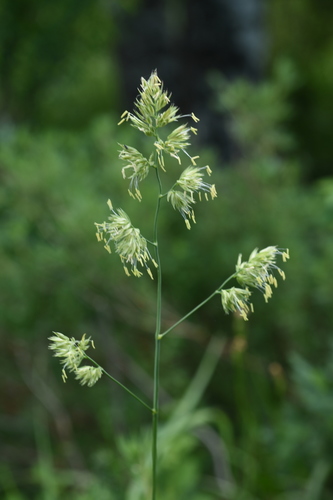
About Stipa lessingiana Trin. & Rupr.
Stipa lessingiana Trin. & Rupr. was first formally described by Trinius and Ruprecht in their 1842 work Species Graminum Stipaceorum. This description is translated from the original Latin protologue: Its panicles are reduced in size and enclosed within the leaf sheath, with branches that are nearly solitary, each bearing 1 to 2 flowers. Glumes are very acuminate and nearly equal in size. Lemmas measure 4 to 5 lines, approximately 8 to 10 mm long, are densely covered in fine pubescence all the way to the apex, and are nearly twice as long as the glumes. The awn is deciduous, glabrous from its base to the node, twisted, and obscurely geniculate; the upper section is short and has erect plumose hairs, and the full awn measures 5 to 6 inches, approximately 12 to 15 cm long. Anthers are glabrous (naked). The type specimen was collected by Lessing, numbered 413, in Orenburg Governorate. In growth habit it resembles Stipa arabica var. meyeriana, but differs by having leaves that are nearly one foot long, approximately 30 cm, that are more rigid and reach the panicle, and the base of the awn up to the node is completely glabrous, just like in Stipa pennata. It differs from Stipa pennata by its shorter awns and shorter plume, which do not spread or become divaricate; it also differs by having florets that are pubescent all over, including all the way up to the apex.