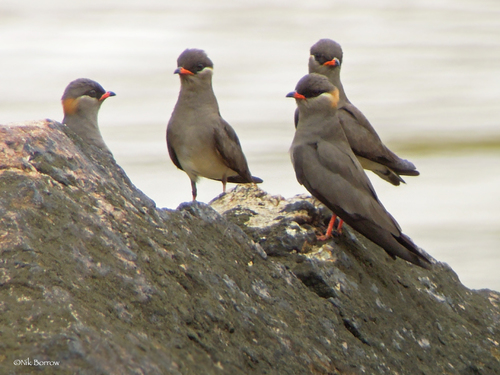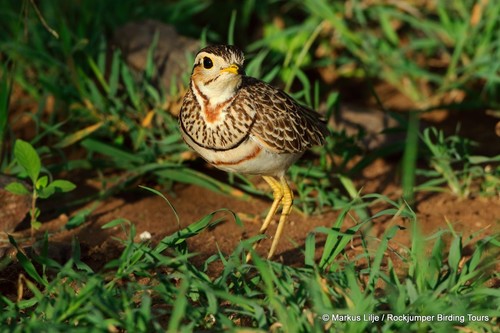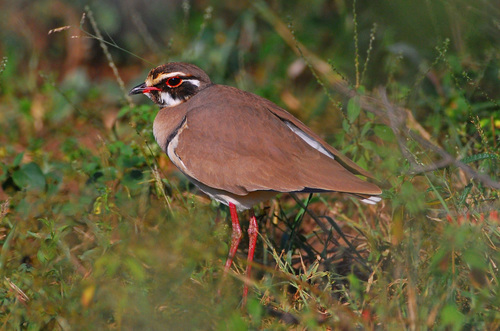
About Stiltia isabella (Vieillot, 1816)
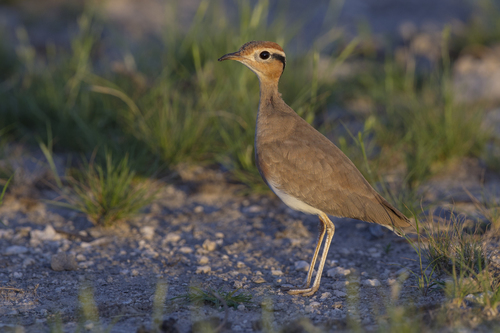
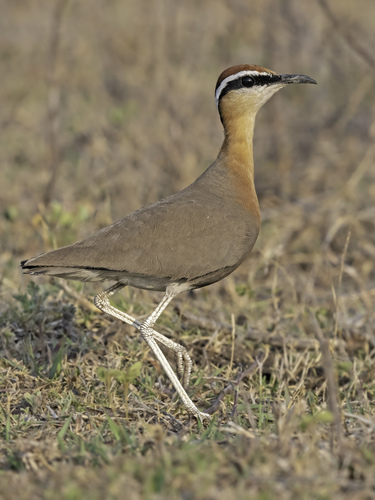
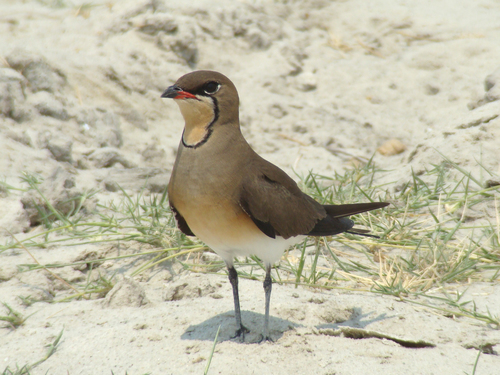
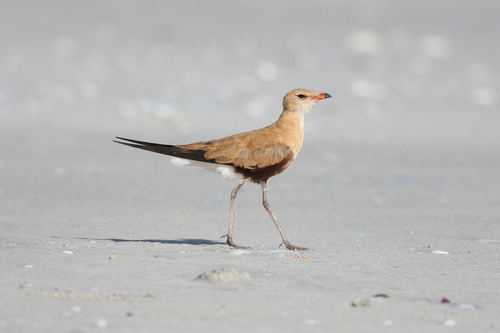
The Australian pratincole, scientifically named Stiltia isabella (Vieillot, 1816), is a medium-sized slender shorebird with long legs, long pointed wings, and a short decurved bill. It measures 19–24 cm (7.5–9.4 in) in length, has a wingspan of 50–60 cm (20–24 in), and weighs 55–75 g (1.9–2.6 oz). Males and females look identical, but their breeding and non-breeding plumage differs. In breeding plumage, the head, neck, breast, and upperparts are a graded sandy brown. The pointed wings are black, and a black loral strip is present. The chin and throat are white, and the breast is sandy brown. The bill is bright red with a black base, the iris is dark brown, and the legs and feet range from grey to black. Non-breeding plumage is not well understood due to seasonal and individual variation. The loral stripe is fainter than in breeding plumage, and the base of the bill is paler. The upperparts are grey-brown with sandy-buff fringes, and dark flecks sometimes appear along the borders of the pale throat. Juvenile plumage is similar to that of a non-breeding adult, but it has a slightly paler sandy brown colour. Juveniles lack black colouring on the lores, and their forehead, crown, and nape are streaked with dark brown. The juvenile bill is grey-black with a faint reddish base. In flight, the upper body and inner wing are sandy brown, while the outer wing is black. The tail is square-cut, and the upper-tail coverts and sides of the tail are white. Compared to the oriental pratincole (Glareola maldivarum), the Australian pratincole is slightly slimmer and smaller, with longer legs. Worn-plumage juveniles and non-breeding Australian pratincoles can be confused with the oriental pratincole. The Australian pratincole inhabits treeless open plains, sparsely wooded plains, grasslands, claypans, and gibberstone areas, most of which lie in arid and semi-arid rainfall zones. It can also be found around the margins of wetlands, creeks, river beds, bore drains, lagoons, springs, claypans, and sewage farms. During the breeding season, it lives in low, scattered shrubland, as chicks use this vegetation for hiding and shelter.