About Stigmella microtheriella (Stainton, 1854) Fletcher et al., 1945
Stigmella microtheriella is a moth species with a wingspan of 3–4 millimetres (0.12–0.16 in). Its head is ochreous-yellowish, and its collar is ochreous-whitish. The antennal eyecaps are also ochreous-whitish. The forewings are purplish-fuscous, with a rather oblique shining whitish fascia located beyond the middle; the apical area beyond this fascia is darker and more purple. The hindwings are grey. Adult moths are on wing in May, and again in August. This species is parthenogenetic.
Eggs are laid on the underside of a leaf, usually near a rib. The most common host plants are hazel (Corylus avellana), and eggs are sometimes laid on hornbeam (Carpinus betulus). Other recorded host plants include Oriental hornbeam (Carpinus orientalis), Turkish hazel (Corylus colurna), the filbert (Corylus maxima), European hop-hornbeam (Ostrya carpinifolia) and American hophornbeam (Ostrya virginiana).
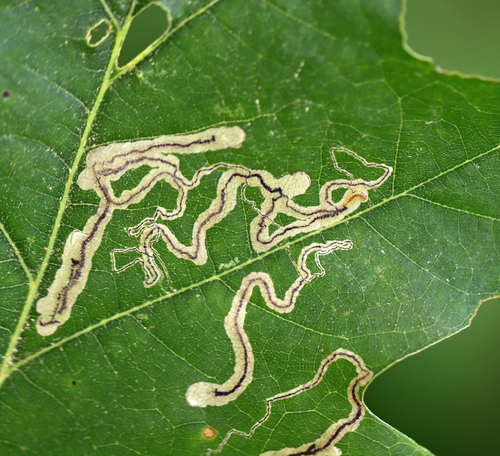
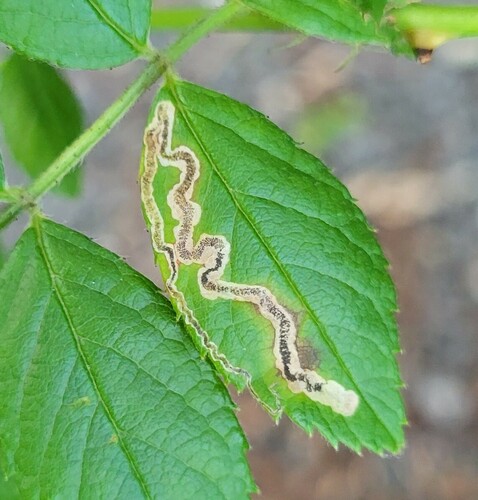
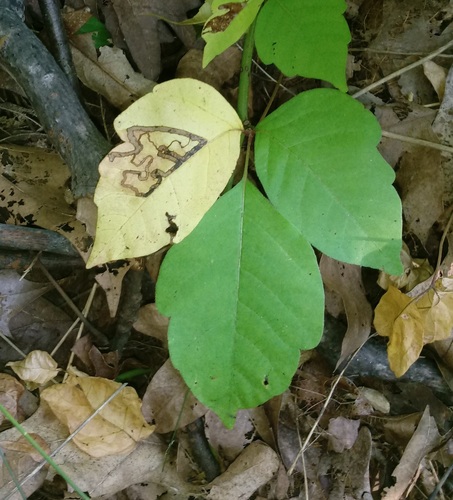
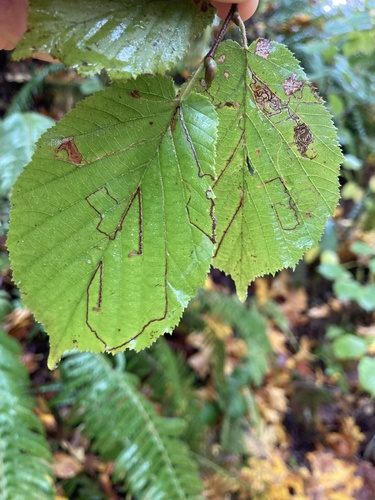
Larvae are yellow with a bright green gut, and have a light brown head. They feed with their belly oriented upwards. The leaf mines they create are narrow and often angular; linear frass fills less than half of the mine. The mine widens gradually, and is never wider than the width of the larva. Cocoons are yellowish brown or pinkish, and are formed on the ground.
This species is found across all of Europe. It is also present in the eastern Palearctic realm and the Australasian realm, specifically in New Zealand. S. microtheriella was introduced to New Zealand from Britain between 1850 and 1860. The introduction was likely linked to Mr Smith, from Smith's Ford in the Maitai Valley in Nelson, who imported hazel trees from Britain. As of 1989, the species had only been observed in Nelson, in the Maitai Valley and on the grounds of Broadgreen Historic House in Stoke. Since 1989, it has spread throughout both the North and South Islands of New Zealand, and is regarded as an agricultural pest for farmers growing hazel species.