About Stigmella aurella (Fabricius, 1775) Walsingham, 1908
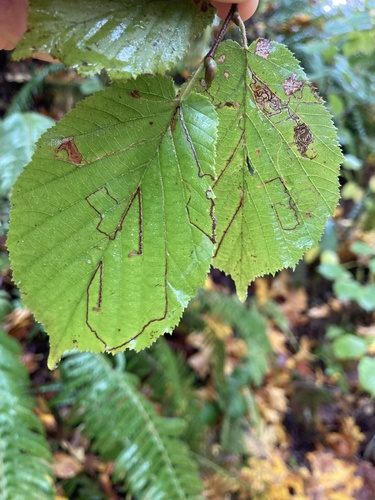
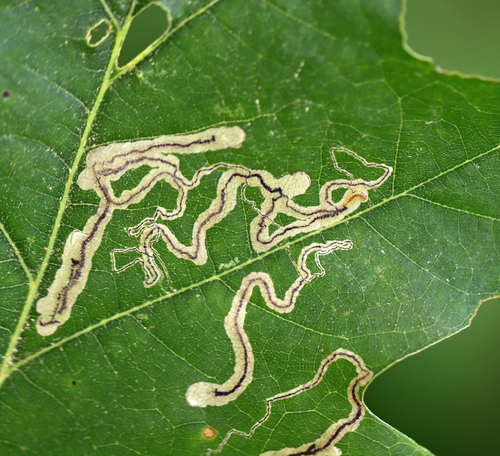
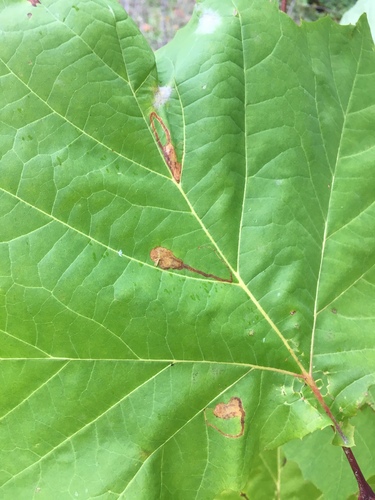
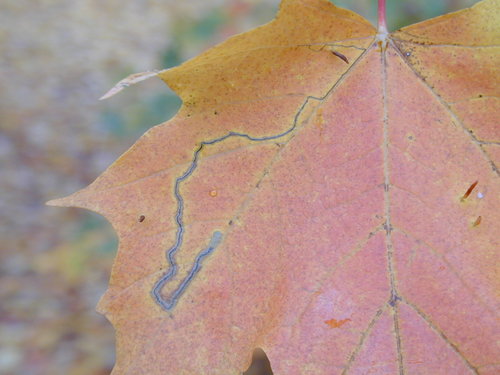
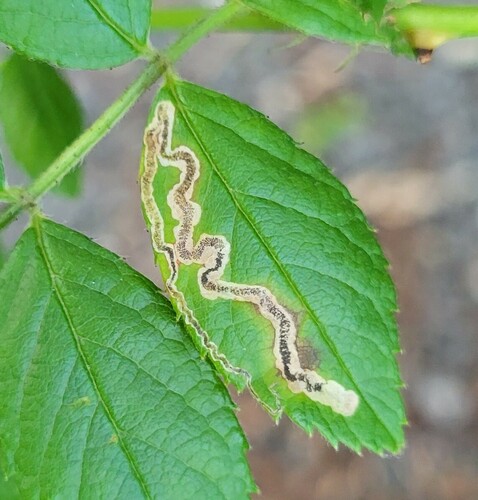
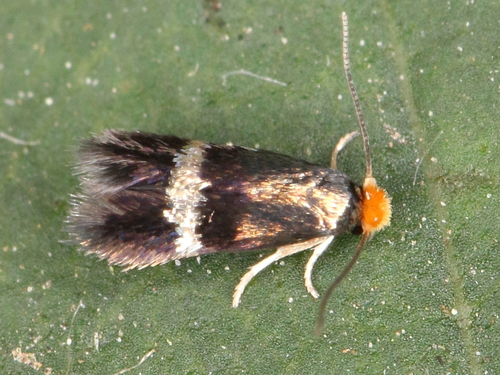
Stigmella aurella (Fabricius, 1775) Walsingham, 1908 is a moth species with an adult wingspan ranging 6–7 millimetres (0.24–0.28 in). The head is colored ferruginous to orange, and the antennal eyecaps are ochreous-whitish. Forewings have a shining copper gold color; they feature a shining pale golden fascia beyond the middle, which is preceded by a purplish or dark purple-fuscous fascia, and the apical area beyond this fascia is dark purple to fuscous. Hindwings are a rather dark grey. Adult moths are active on the wing in May and at later points in the summer. Females lay eggs on either side of a host leaf. Larvae are amber yellow, with a greenish-brown gut and a yellow-brown head. Larvae feed inside leaves, creating a long, sinuous mine gallery that gradually widens, with frass dispersed throughout the gallery. Larval host plants are common agrimony (Agrimonia eupatoria), Agrimonia procera, bastard-agrimony (Aremonia agrimonoides), musk strawberry (Fragaria moschata), wild strawberry (Fragaria vesca), creamy strawberry (Fragaria viridis), water avens (Geum rivale), wood avens (Geum urbanum), European dewberry (Rubus caesius), Rubus dumetorum, European blackberry (Rubus fruticosus), raspberry (Rubus idaeus), blackberry (Rubus plicatus), holy bramble (Rubus sanguineus), stone bramble (Rubus saxatilis), and elmleaf blackberry (Rubus ulmifolius). When ready to pupate, the larva forms a cocoon in detritus; this cocoon ranges in color from pale green to pale ochreous. This species is distributed across Europe from Ireland to Ukraine, the Near East, and the eastern portion of the Palearctic realm.