About Stigmatopora harastii Short & Trevor-Jones, 2020
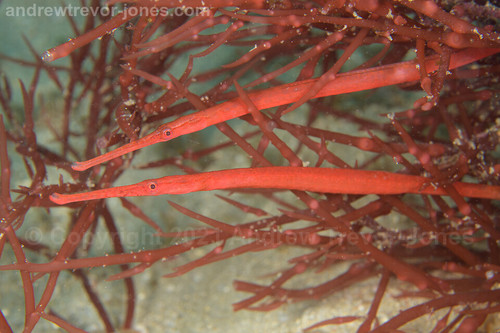
Stigmatopora harastii (Short & Trevor-Jones, 2020) has a distinct, low median ridge running along the dorsum of the head and first trunk ring. This ridge starts at the posterior third of the frontal, crosses the supraoccipital, and extends to both the anterior and posterior nuchal plates. Its opercular ridge is prominent, complete, and not angled toward the dorsal. A distinct, low lateromedial ridge is present between the opercle and the base of the pectoral fin. The dorsal-fin origin sits on the 6th to 7th trunk rings, with 19 to 20 subdorsal rings, made up of 12 trunk rings plus 7 or 8 tail rings. The lateral trunk ridge ends at the first tail ring. The dorsum of the snout has a red background with large, irregular pale white spots. The sides of the head and anterior trunk rings bear large, irregular pale white spots, or a diffuse pale white stripe. In males, the venter of the first trunk ring has a longitudinal row of distinct red elongated spots along the midline, that almost form a stripe. In males, the venter of the anterior trunk rings is pale red, with a large cluster of distinct red spots extending posteriorly starting from the second trunk ring; females only have a few scattered small red spots in this area. Currently, Stigmatopora harastii is only known to occur at three localities in central New South Wales, Australia: Botany Bay, Shellharbour, and Jervis Bay. This species inhabits semi-exposed bay entrances and ocean embayments, where the underwater terrain consists of sandy areas interspersed with boulders and hard flat reefs. Individual S. harastii and pairs have been observed living in close association with a finger sponge species that appears to belong to the family Callyspongiidae, and multiple red algal species that appear to belong to the family Gracilariaceae, in the genera Crassiphycus and Gracilaria.