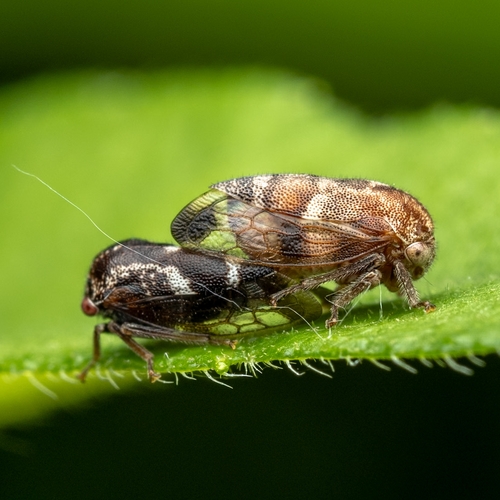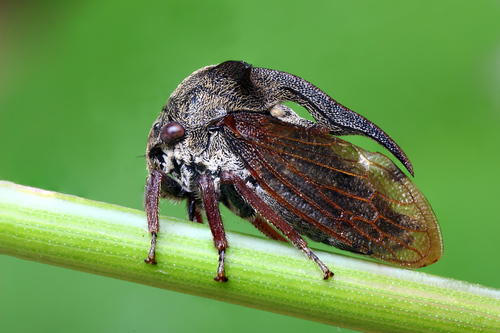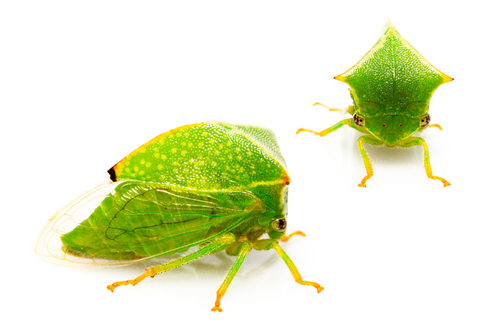
About Stictocephala bisonia Kopp & Yonke, 1977
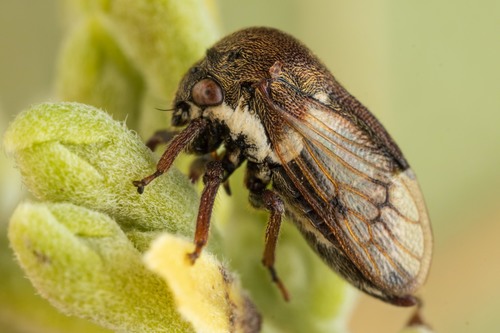
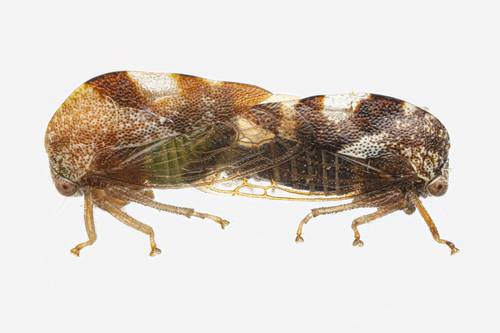
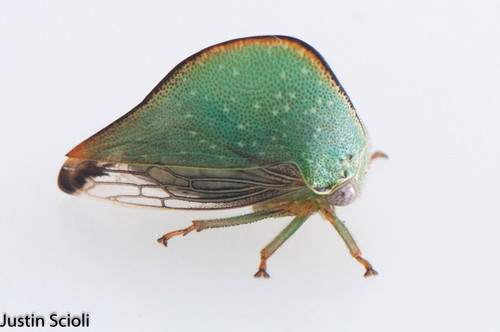
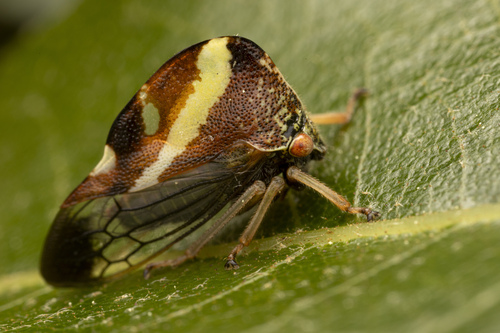
The buffalo treehopper (Stictocephala bisonia) is a species of treehopper in the subfamily Smiliinae. It is sometimes alternatively classified as Ceresa bisonia. This species is native to North America, but is now widespread across southern Europe, and also present in the Near East and North Africa. It has recently been reported from vineyards in Kashmir, India. S. bisonia mates during the summer. Males attract females with a signal that, unlike the songs of cicadas and crickets, is perceived by females not as sound waves but as vibrations through the host plant. From July to October, females use a blade-like ovipositor to lay eggs. Females lay up to a dozen eggs in each slit they cut into plant tissue. Nymphs hatch from the eggs the following May or June. The nymphs resemble wingless adults, but have a more spiny body. After hatching on trees, they descend to feed on grasses, weeds, and other nonwoody plants. They molt several times over the next month and a half until they reach adulthood. Once they become adults, they return to trees to continue the species' life cycle.