About Sticta filix (Sw.) Nyl.
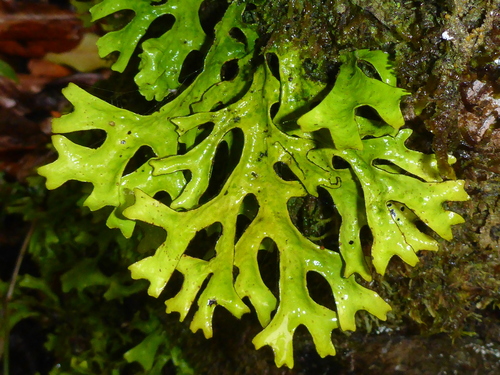
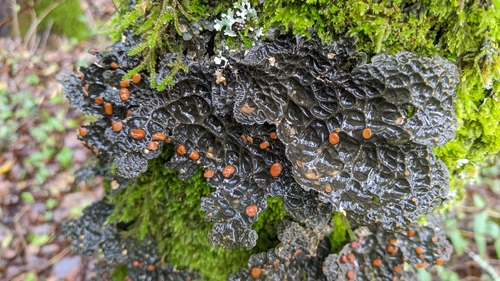
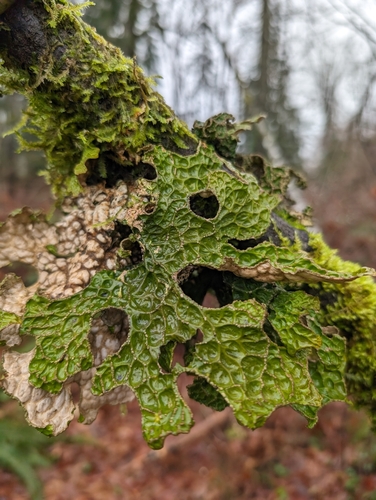
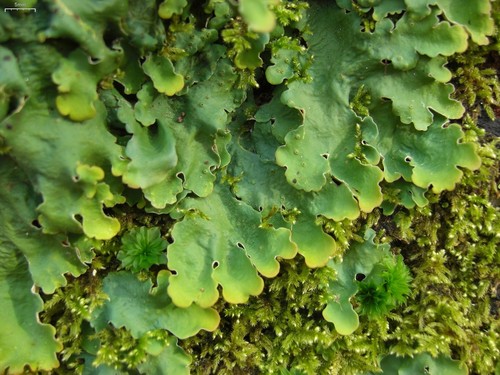
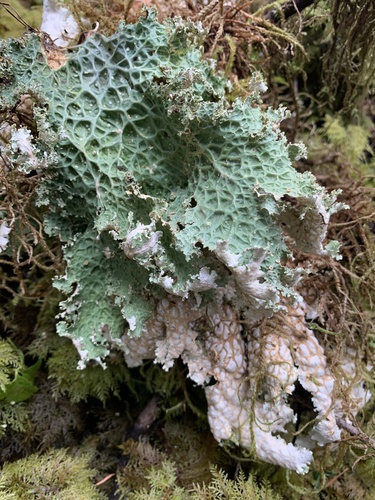
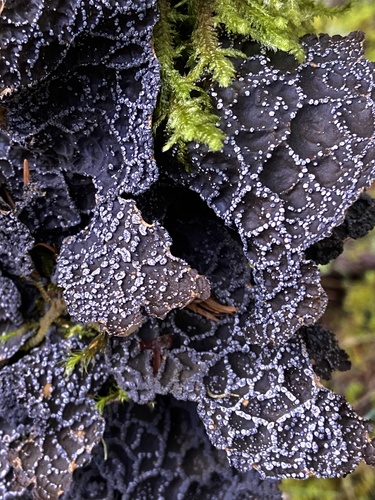
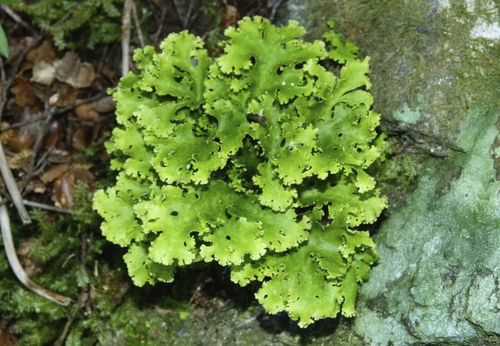
The vegetative body of this lichen, called a thallus, is foliose, meaning it has a leafy appearance. Thalli of Sticta filix typically measure 2 to 5 centimetres (0.8 to 2.0 in) in diameter, though individual specimens have been recorded with diameters reaching up to 10 centimetres (4 in). Its lobes are rounded; the upper surface of the thallus is black or brown, while the lower surface is covered in a light to dark brown layer of fine hairs called a tomentum, and bears a small number of crater-like structures called cyphellae. The thalli often have an odour resembling shrimp or fish. Vegetative reproductive structures known as isidia or soredia are commonly present in this species; cup-shaped spore-bearing structures called apothecia are rarely encountered. Like other Sticta species, Sticta filix usually grows on bark, wood, or mossy rock. Its photosynthetic partner (photobiont) can come from any of the following green algae genera: Chloroidium, Coccomyxa, Elliptochloris, Heveochlorella, and Symbiochloris. Lichen-like organisms in the liverwort genus Monoclea are completely unrelated to Sticta, but are easily confused with it. Sticta species are primarily distributed across tropical regions, though some species have been found as far north as Norway and as far south as the southern tip of South America. Most Sticta species grow on bark, wood, or mossy rock, generally in humid habitats.