About Stichodactyla helianthus (Ellis, 1768)
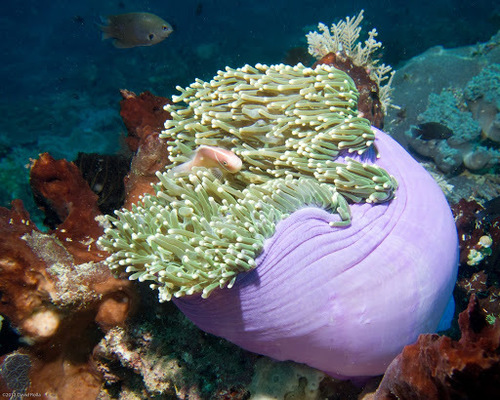
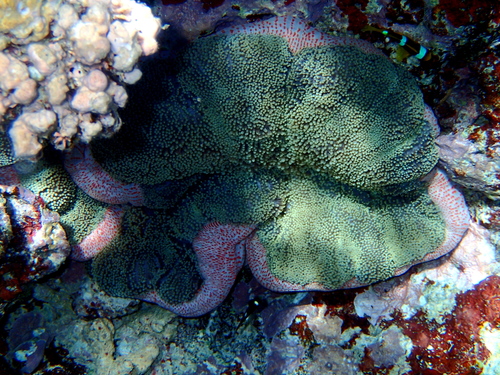
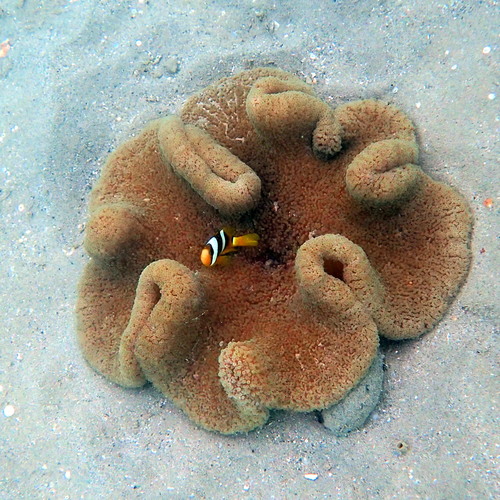
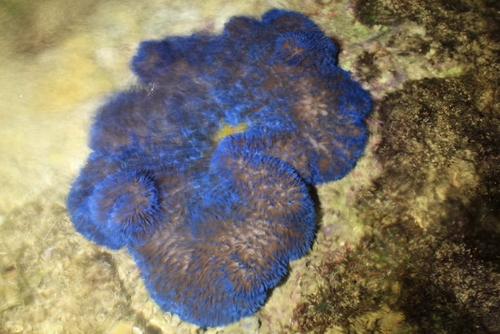
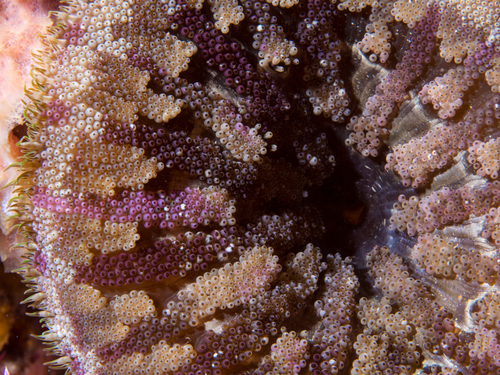
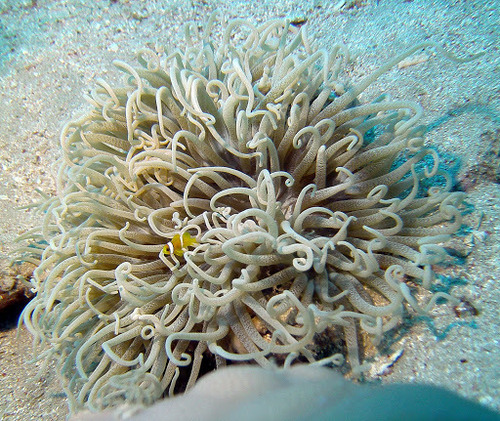
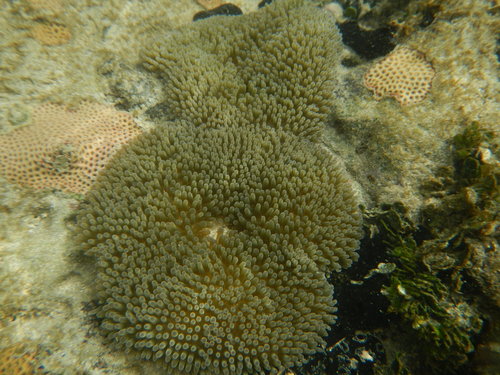
Stichodactyla helianthus (Ellis, 1768), commonly called the Sun Anemone or Caribbean Sun Anemone, is a tropical sea anemone. It belongs to the order Actiniaria, which includes all sea anemones, in the class Anthozoa. This species was described posthumously by John Ellis in 1786. Like all anthozoans, S. helianthus has no operculum (a circular calcareous shell), has circular mitochondrial DNA, and has siphonoglyphs (ciliated grooves) in its pharyngeal wall. Its coelenteron surrounds the central body cavity, and this cavity is split by distinct septa. For reproduction, this species has no medusa stage, and only exists in the polyp stage. S. helianthus is part of the family Stichodactylidae, the carpet anemone family. It is a large, sessile anemone that grows 10 to 20 cm in diameter. Its color ranges across shades of golden brown, yellow, and green. A large number of nematocyst-coated tentacles cover its flattened oral disc; nematocysts release toxins that function in predation and defense. This is a marine epibenthic species, found in shallow seafloor habitats at depths between 1 and 10 meters. It occurs predominantly in the Caribbean and Western Atlantic Seas, and has also been found along the coasts of the United States, Canada, Costa Rica, and Belize. While individuals may live alone, S. helianthus most commonly lives in dense aggregations, such as on reef formations. S. helianthus produces toxins that have promising potential medical applications. The peptide inhibitor ShK-186, a toxin from this species, has been tested in clinical trials for treating autoimmune diseases, and has been developed into an investigational drug called Dalazatide that targets disease-causing cells linked to type 1 diabetes, lupus erythematosus, and multiple sclerosis. Two cytolysins from this species, St I and St II, have shown pharmacological potential in studies using guinea pig models, with effects on neural and cardiac activity. Another toxin, ShPI-1, is a non-specific protease inhibitor that also has medical potential, and a variant of this toxin has increased biomedical potential due to its inhibition properties. While most of these toxin-based applications require further research, S. helianthus has significant potential for biomedical use via toxin production.