About Stichodactyla haddoni (Saville-Kent, 1893)
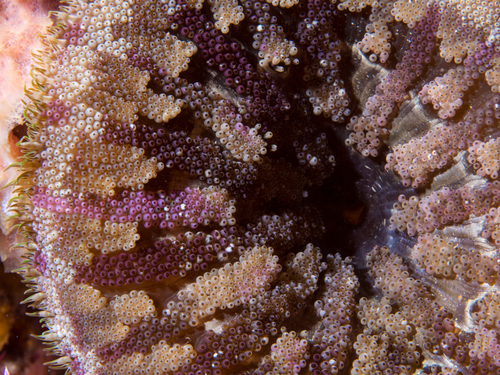
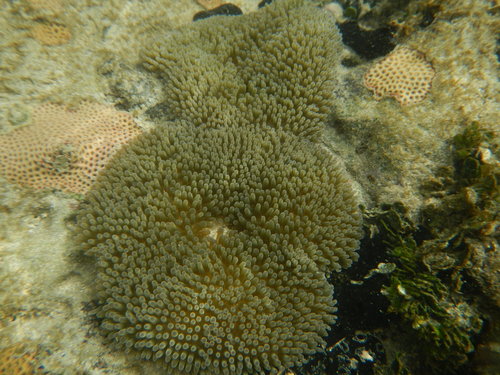
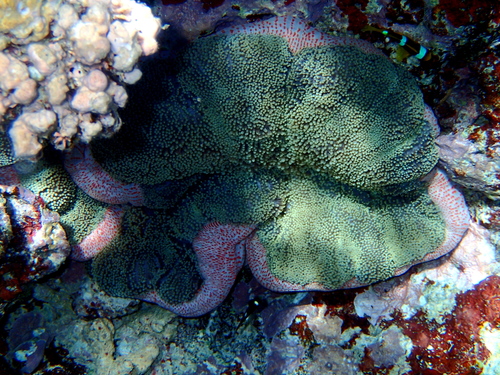
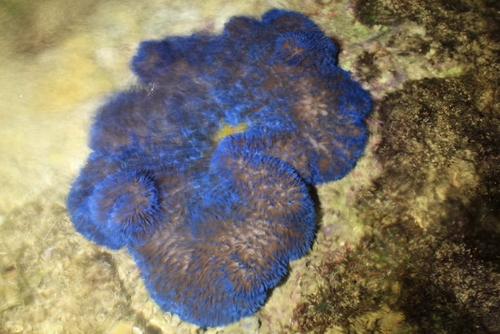
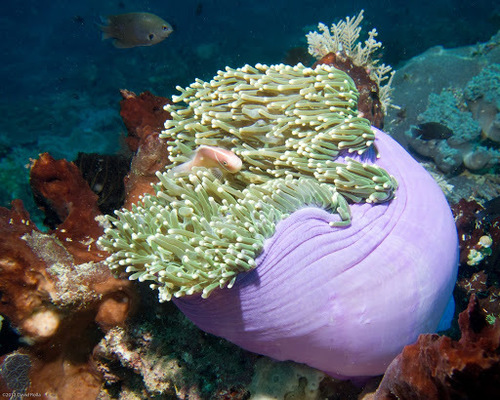
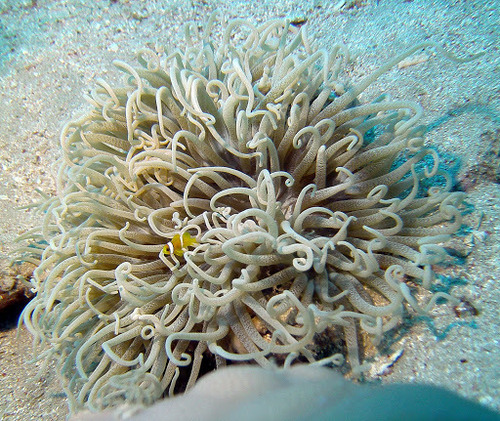
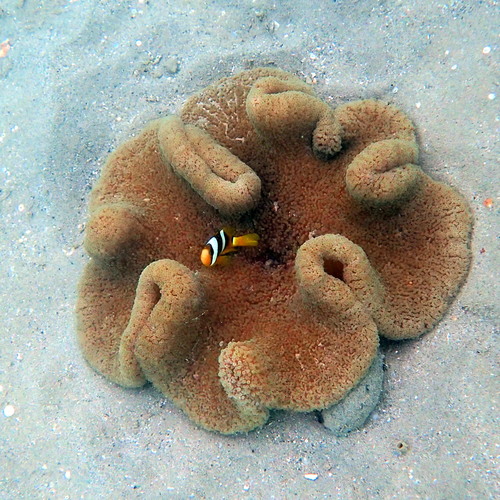
Stichodactyla haddoni (Saville-Kent, 1893) is characterized by a folded oral disc that reaches 50–80 cm (20–31 in) in diameter, with a 1–2 cm (0.4–0.8 in) tentacle-free oral area. The tentacles have rounded tips; the tip may be green, yellow, gray, or rarely blue and pink. The tentacles themselves are generally yellowish or tan, and alternating short and long tentacles grow around the outer circumference of the oral disc. The column, the external anemone structure visible when the animal is closed, has small, non-adhesive bumps called verrucae. These bumps are usually the same color as the column itself, so they are not easily visible. Stichodactyla haddoni lives on sandy surfaces, and is widespread throughout tropical and subtropical waters of the Indo-Pacific. Its range extends from Mauritius to Fiji, and from the Ryukyu Islands of southern Japan to Australia. In Thailand, S. haddoni is called Hed lub (เห็ดหลุบ, translated as "bob up and down mushroom") for its appearance, which resembles a mushroom that pops up and down. On some Thai islands, including Ko Samui and Ko Pha-ngan, these sea anemones are used as an ingredient in the local seasonal dish called Kaeng kua (แกงคั่ว), even though S. haddoni is a protected species in Thailand.