About Stewartia malacodendron L.
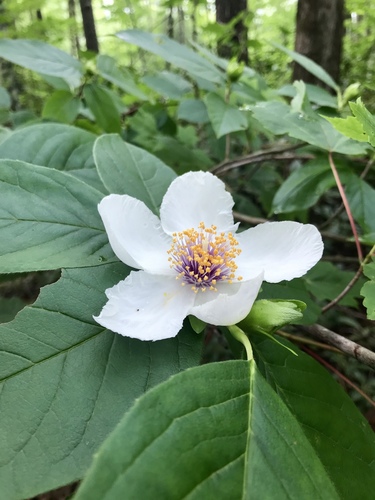
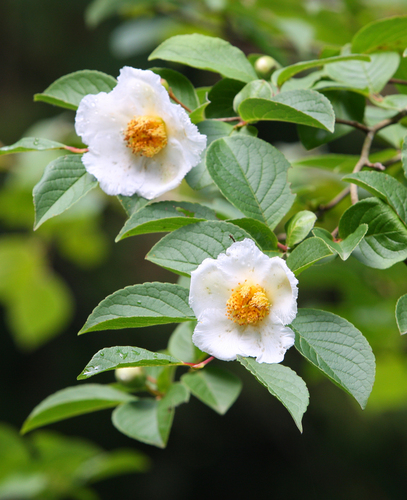
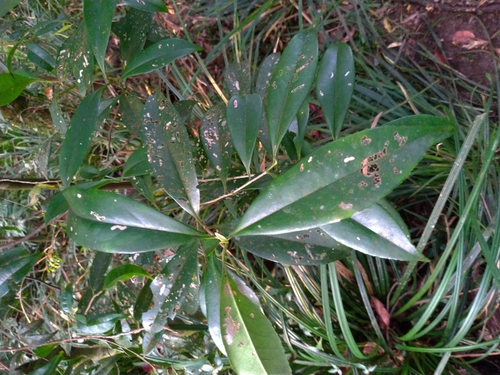
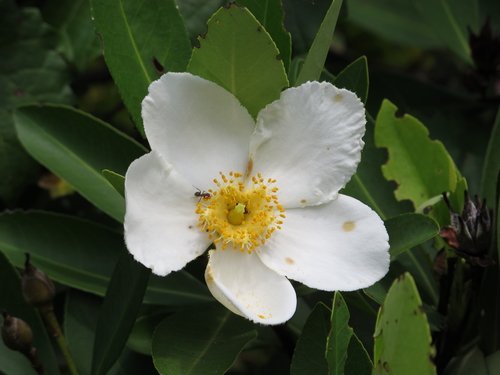
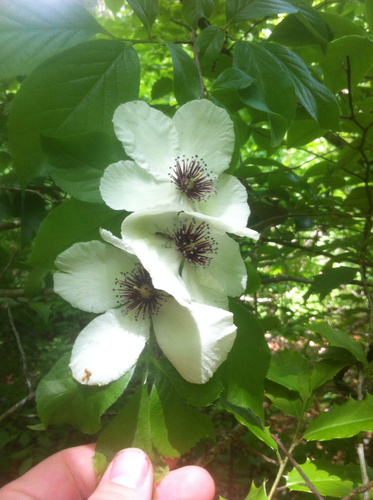
Stewartia malacodendron, commonly called silky camellia, silky stewartia, or Virginia stewartia, is a flowering plant species in the family Theaceae. It grows slowly to reach a mature size of a large deciduous shrub or small tree, typically 3–4.5 m (10–15 ft) tall, and occasionally up to 9 m (30 ft) tall. It is native to the southeastern United States. Its Latin specific epithet malacodendron translates directly to "soft tree". Its common name "silky camellia" comes from the appearance and texture of its flowers, which resemble the flowers of the closely related camellias. Stewartia malacodendron is native to Texas, where it is a rare species; it only occurs in a small area along Little Cow Creek near Burkeville, growing on stream banks, ravines, and wooded bluffs in well-draining soil. It is also found in scattered locations across Arkansas, Georgia, the panhandle region of Florida, Louisiana, southern Alabama, and as far north as Virginia. This species is listed as endangered in the US states of Arkansas and Florida. In cultivation, Stewartia malacodendron has a slow growth rate, is difficult to transplant, and is considered challenging to propagate. It grows best in partial shade in well-draining soils. It has been cultivated in the United States since 1752, and is also grown in parks and gardens in other temperate regions of the world. In the United Kingdom, it has been awarded the Royal Horticultural Society's Award of Garden Merit.