About Sternula antillarum R.Lesson, 1847
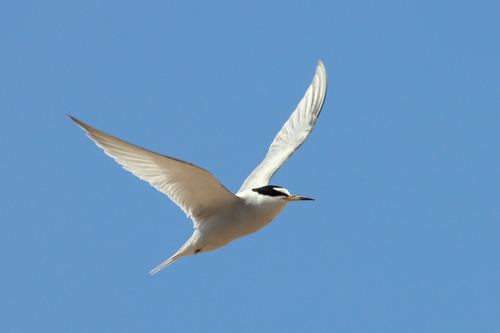
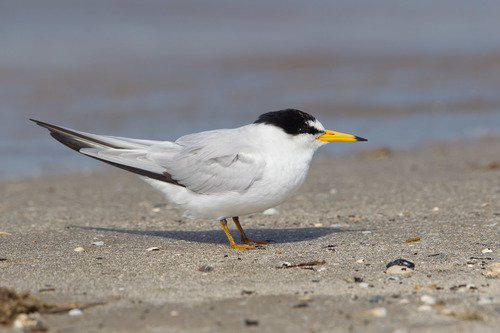
The least tern (Sternula antillarum R.Lesson, 1847) primarily hunts for food in shallow estuaries and lagoons, areas where smaller fish are plentiful. It hovers above the water until it spots prey, then plunges into the water without fully submerging itself to catch its meal. In southern California, the most common recent prey for both chicks and adult least terns are silversides smelt (Atherinops spp.) and anchovy (Anchoa spp.). Adult least terns in southern California also eat kelpfish, most likely giant kelpfish (Heterostichus rostratus). Shiner perch and small crustaceans are common prey for this species in other locations. The species is known to eat insects during El Niño events. In southern California, least terns feed in bays, lagoons, near shore, and also in the open ocean more than 24 km (15 mi) from shore. In other areas, they feed close to lagoons or bay mouths. Adult least terns do not need cover, so they commonly roost and nest on open ground. Once young chicks reach three days old, parents brood them less often. At this age, chicks need wind blocks, shade, and protection from predators. In some least tern colonies in southern California, Spanish roof tiles are placed to provide hiding spots for chicks. Colony disruption is commonly caused by predation from burrowing owls, gull-billed terns, and American kestrels. Depredation by domestic cats has been recorded in at least one colony. Predation on inland breeding least terns by coyotes, bobcats, feral dogs and cats, great blue herons, Mississippi kites, and owls has also been documented.