About Stereocaulon ramulosum Raeusch.
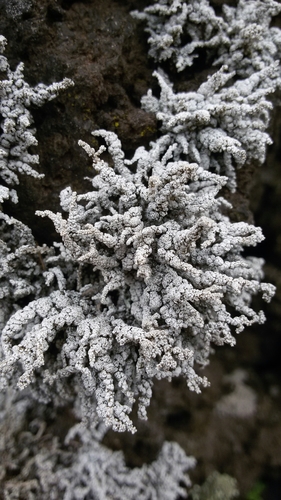
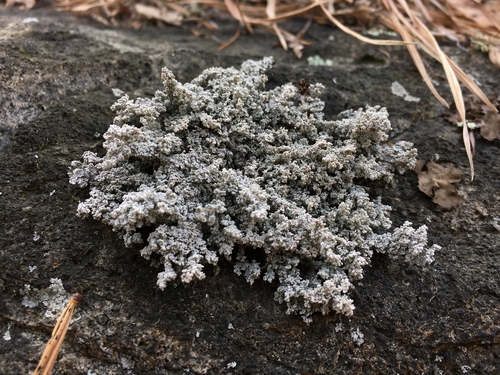
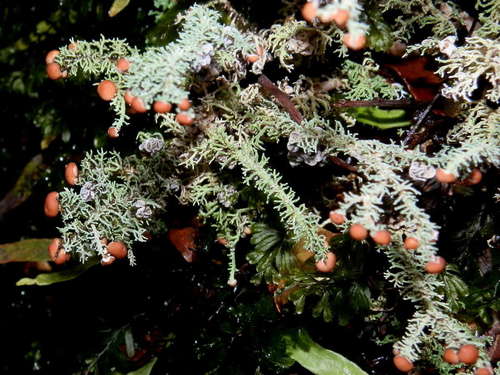
Stereocaulon ramulosum, commonly called snow lichen, is a terricolous fruticose lichen in the Stereocaulaceae family. It has a cosmopolitan distribution. In the Australasian region, it is common in eastern Australia and New Zealand, and has also been recorded at Lord Howe Island and Macquarie Island. It typically grows in cool, moist areas with high cloud cover. It can grow on rocky ground, or as an epiphyte on tree branches. Stereocaulon ramulosum was the first lichen discovered to contain an amylose polysaccharide. This species is unusual because its fungal component associates with two different chlorophyll-producing species; most lichens only have one. The primary partner is a green alga, which gives the lichen its characteristic color. The second partner is a cyanobacterium, which lives in the cephalodia, wart-like structures on the lichen. This single life form includes representatives from three different kingdoms: Fungi, Protista, and Eubacteria. The generic name Stereocaulon comes from the ancient Greek stereós and Latin caulis, referring to the hard central stem of the lichen. The specific epithet ramulosum derives from the Latin word ramulose, meaning "having many small branches".