About Stercorarius pomarinus (Temminck, 1815)
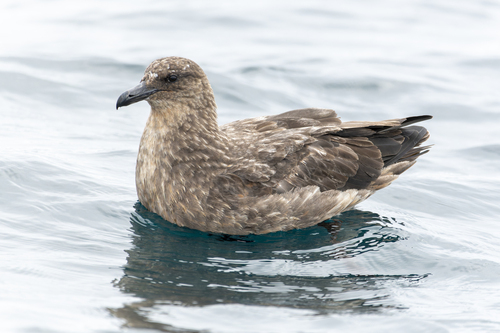
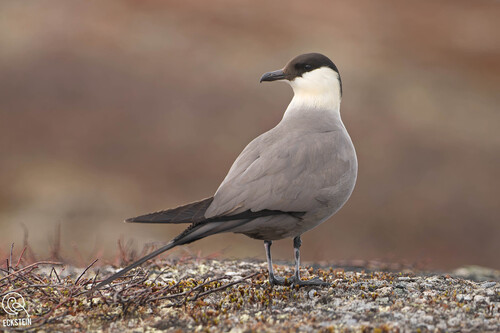
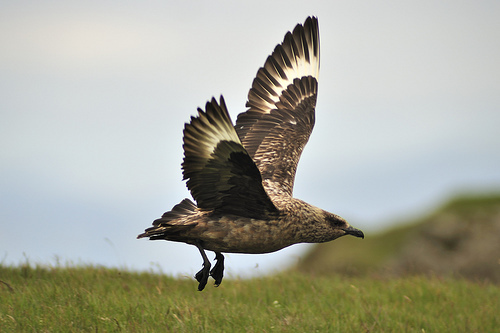
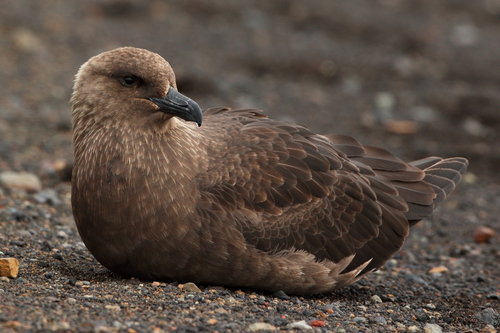
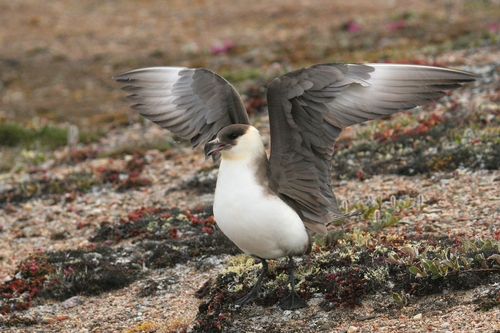
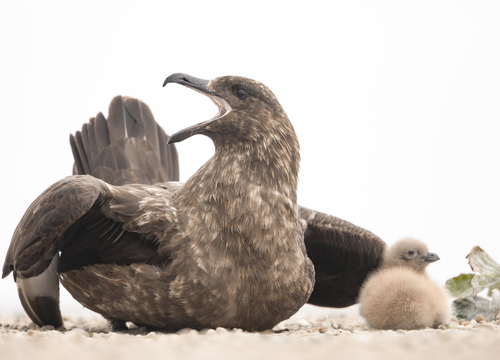
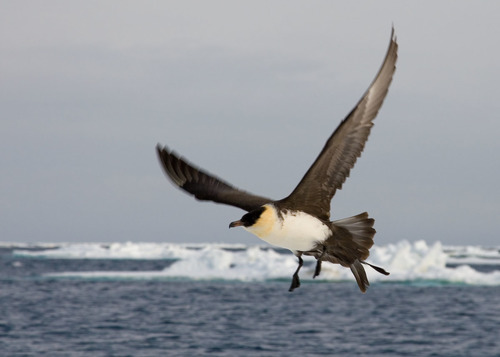
This species, Stercorarius pomarinus, measures 46 to 67 cm (18 to 26 in) in total length, has a wingspan of 110 to 138 cm (43 to 54 in), and weighs 540–920 g (1.19–2.03 lb). The upper end of the total length range includes the elongated 10 cm (3.9 in) tail streamer that develops on breeding adults. Identifying this jaeger is difficult because it closely resembles the parasitic jaeger, and it occurs in three distinct plumage morphs. Pomarine jaegers are larger than common gulls. Compared to parasitic jaegers, they are much bulkier, have broader wings, and are less falcon-like in shape, though they share the same wide range of plumage variation. Their flight is more steady and slower-paced than that of the smaller parasitic jaeger. This species produces many harsh chattering calls, along with other calls that sound like "which-yew". Adult light-morph pomarine jaegers have a brown back, mostly white underparts, and dark primary wing feathers marked with a white "flash". Their heads and necks are yellowish-white with a black cap. Adult dark morph individuals are solid dark brown, while intermediate morph birds are dark overall with slightly paler underparts, heads, and necks. All three morphs have the characteristic white wing flash, which appears as a distinctive double flash on the underwing. In breeding adults of all morphs, the two central tail feathers are much longer than the other tail feathers, with a spoon shape and a twist away from the horizontal orientation. Juvenile pomarine jaegers are even more challenging to identify, and cannot be easily distinguished from juvenile parasitic jaegers at a distance based on plumage alone.