About Stercorarius chilensis Bonaparte, 1857
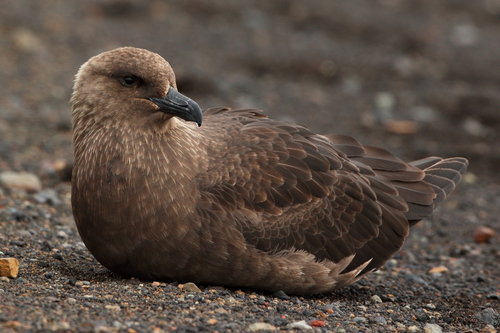
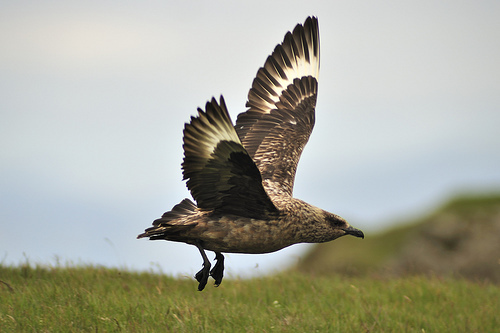
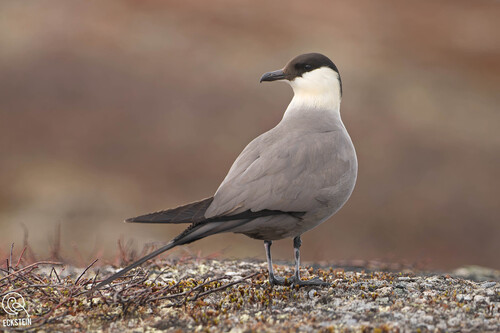
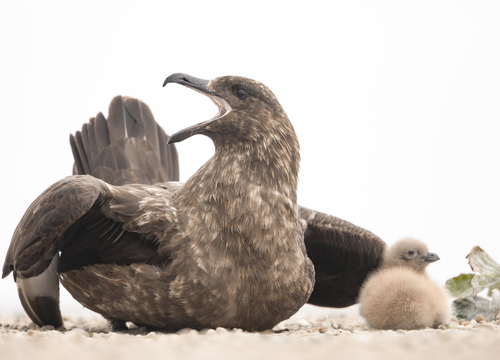
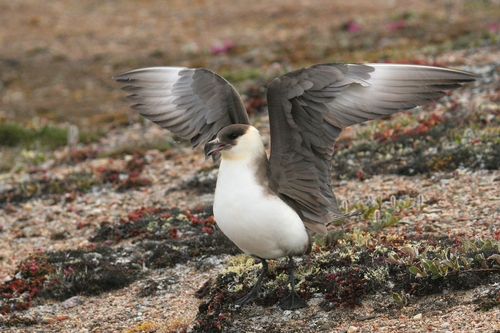
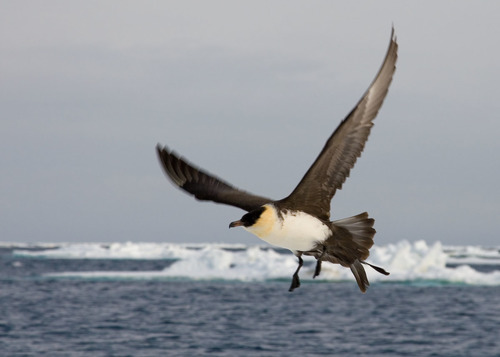
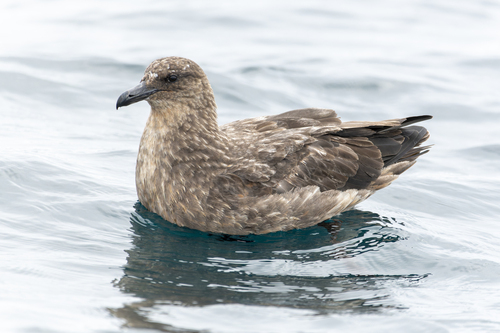
The Chilean skua, Stercorarius chilensis Bonaparte, 1857, has distinct physical characteristics for adults. Adult Chilean skuas are typically dark across the back, flanks, and cheeks, with uniformly pale underparts. Dark plumage usually extends from the back across the upper chest to form a pectoral collar. The underside of the wings is characteristically cinnamon-colored, though this shade can appear quite dull in some individuals. All adults have a distinctive dark cap, plus prominent pale gold streaking on the face and neck. They have black legs, brown irises, and a small bluish bill with a dark tip, and their wingspan measures 130 to 138 cm. Juveniles have brighter coloration than adults and do not have light streaking. They also have a strong dark cap, but often lack the pectoral collar seen in older birds. While Chilean skuas can be mistaken for Falkland skuas, they look much more slender and compact in flight, with unique red coloration and white crescents on the wings. This species is endemic to South America and lives in coastal habitats ranging from central Peru to northern Argentina. It breeds between southern Chile and Cape Horn, Argentina, and its wintering range extends north into Brazil, where it uses tropical coastal waters. In 2009, one individual was exceptionally sighted on Inaccessible Island, part of the African region of the southern Atlantic. Breeding adults prefer sandy coastlines with beached kelp and freshwater streams. The species is also known to associate with southern hake fisheries in the fjords and channels of southern Chile. Chilean skuas gather in breeding colonies on sandy coastal habitat from November to February or March. Breeding adults tend to concentrate in the center of the colony, while non-breeding adults and subadults occupy the colony fringes. Nesting parents attack intruders from above, and this aggressive behavior can include discharging excrement onto the perceived threat. If the intruder is another Chilean skua, it will fake a leg injury to show submission to the attacking bird. Aggression between neighboring birds is only seen in non-dense breeding colonies. Clutches usually contain two eggs, which are incubated for 28 to 32 days. When parents are absent, chicks stay motionless at the nest site, camouflaging themselves in sand among patches of giant kelp. When parents are present, chicks will venture slightly further from the nest, but will walk back to the nest with their wings folded against their body and their head tucked under their shoulders at the first sign of a threat.