About Stercorarius antarcticus (R.Lesson, 1831)
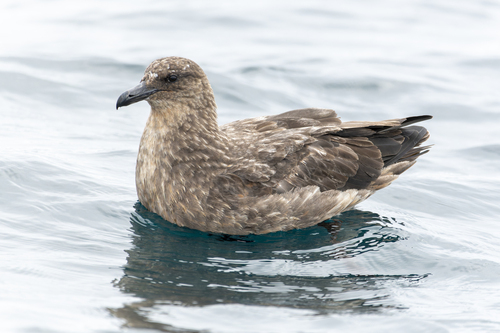
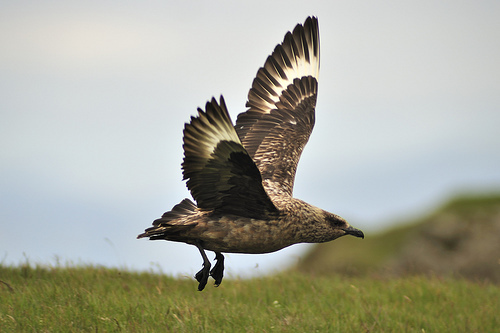
This is the heaviest skua species, and it rivals the two largest gulls—the great black-backed gull and the glaucous gull—as the heaviest species in the shorebird order, though it does not reach as great a length or wingspan as these gulls. It measures 52–64 cm (20–25 in) in length, 126–160 cm (50–63 in) in wingspan, and has a body mass ranging from 1.2–2.18 kg (2.6–4.8 lb). For the subspecies S. a. hamiltoni measured on Gough Island, 9 males had an average weight of 1.43 kg (3.2 lb), and 9 females had an average weight of 1.65 kg (3.6 lb). For the subspecies S. a. lonnbergi measured in the Chatham Islands, 30 males had an average weight of 1.73 kg (3.8 lb), and 32 females had an average weight of 1.93 kg (4.3 lb). This colony average body mass for S. a. lonnbergi is one of the highest recorded for any living species of shorebird. A 2016 study found that brown skuas can identify individual human beings, a finding that may indicate the species has high cognitive abilities. Brown skuas have been observed to sometimes form bonds with humans who stay in Antarctica for extended periods, such as Eastern Orthodox clergymen at Trinity Church, and to engage in playful or seemingly mischievous behavior with these people.