About Stenotus binotatus (Fabricius, 1794)
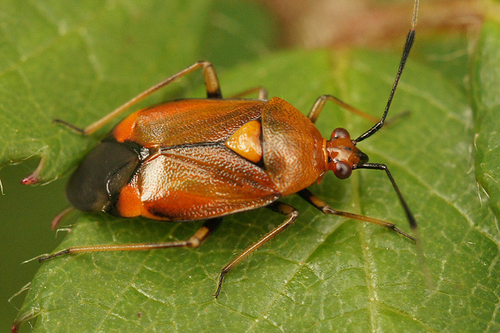
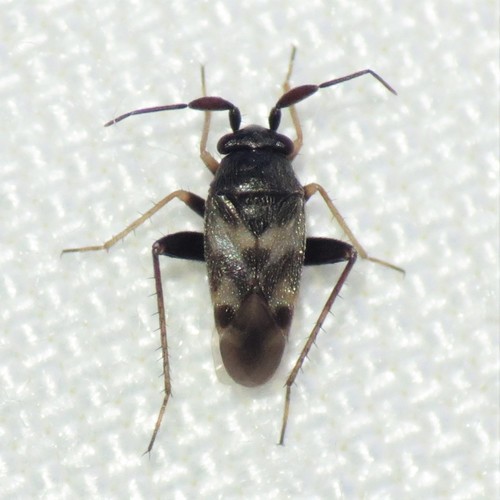
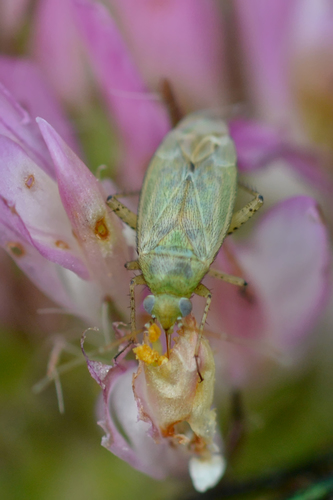
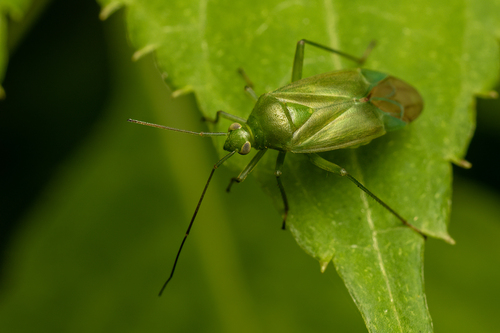
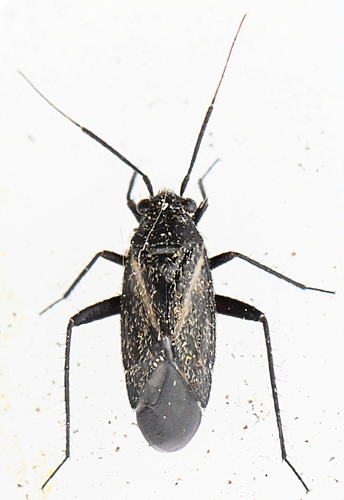
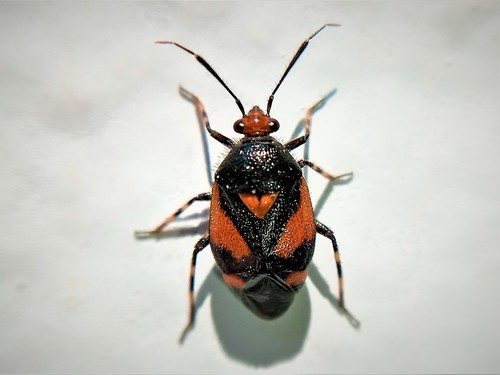
Stenotus binotatus (Fabricius, 1794), the two-spotted plant bug, is a fairly large species of plant bug, reaching 6 to 7 millimetres (0.24 to 0.28 inches) in body length, with a somewhat variable appearance. Individuals have roughly parallel-sided bodies, and body coloration varies by both sex and age: darkening and marking intensity increases as the bug ages. Males are mostly yellow with darker markings on the pronotum and forewings, while females are greenish-yellow with paler markings. This species is native to most of the Palearctic realm, and has been introduced to temperate regions across the globe. It is common throughout the northern and central United States and southern Canada, and was introduced to New Zealand, where it is now found almost across the entire country. Both nymphs and adult Stenotus binotatus feed on grass inflorescences, especially those of timothy-grass (Phleum pratense). In New Zealand, this species has been collected from a wide variety of plants, including the grasses brown top, Yorkshire fog, cocksfoot, wheat, barley and maize, plus many other plants: rushes, Hypericum, Leptospermum scoparium, Metrosideros, Nothofagus, Coriaria, Olearia, Muehlenbeckia, Carmichaelia, Larix decidua, Eucalyptus, Melicytus ramiflorus, Coprosma robusta, hemlock and nettles. In the United Kingdom, adult bugs are active from June to September; in New Zealand, adults are active in December and January.