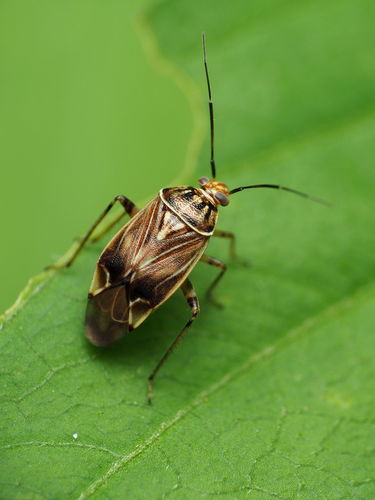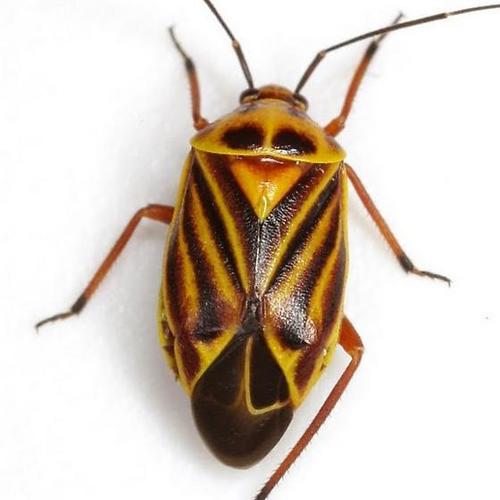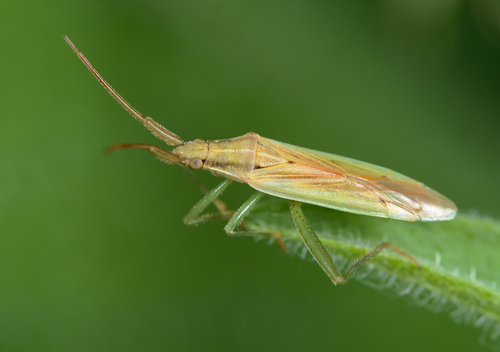
About Stenodema laevigata (Linnaeus, 1758)
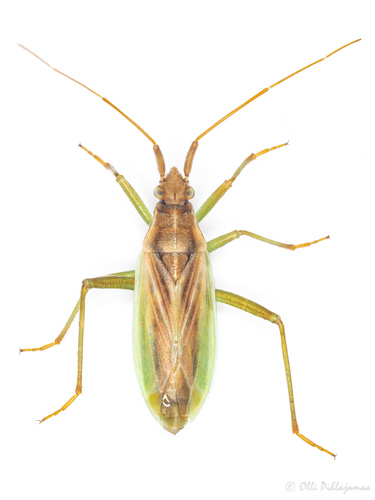
Description: Adult Stenodema laevigata are 7–10 millimetres (0.28–0.39 in) in body length. They are most commonly light green, but can also be yellow or brown. This species lacks femoral spurs, and has a densely pitted prothorax. Ecology: Larvae are light yellowish and hatch in summer, with the adult stage reached by August. Both larvae and adults feed on unripe grains from grass genera including Alopecurus, Dactylis, Festuca, and cultivated wheat. Larvae may sometimes suck juices from leaves and stems. As they develop further, they also begin consuming grass seeds and flowers. Larvae hibernate over winter in soil and leaf litter. Both males and females mate in spring; males are a darker green than females. Larvae are active from May to July, after which a new adult generation emerges that persists until the following spring.