About Stenodactylus petrii Anderson, 1896
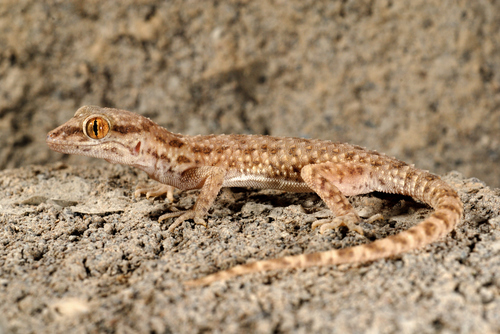
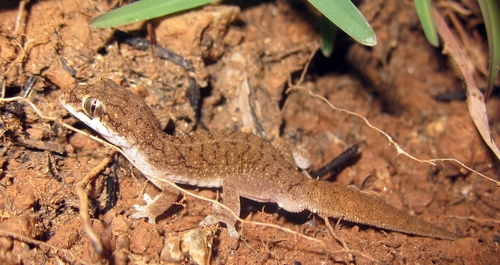
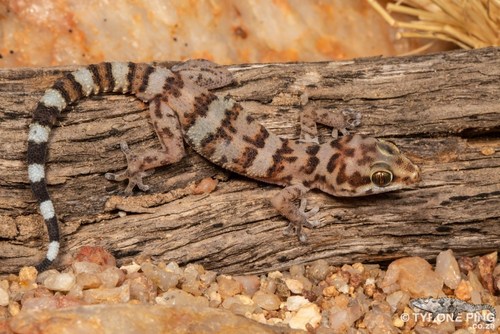
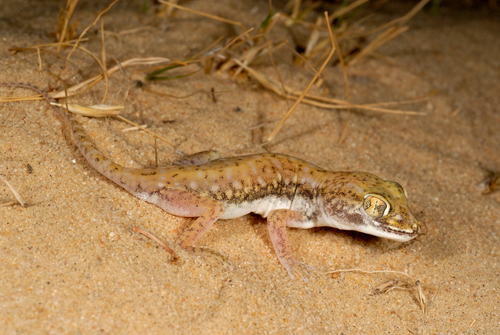
Stenodactylus petrii, commonly called the dune gecko, Anderson's short-fingered gecko, or Egyptian sand gecko, is a small, mostly nocturnal gecko species in the genus Stenodactylus. This species is not classified as a frog-eyed gecko. It inhabits arid regions across northern Africa and in Israel. From the head to the base of the tail, adult individuals measure between 2 and 3 inches (5 to 8 cm) long, making this a very small dwarf gecko. Their tails are quite long relative to their body size, reaching 1 to 2 inches (3 to 5 cm) in length. If a gecko drops its tail, the tail will regrow, but the new tail will be shorter and stubbier than the original. Unlike many other gecko species, dune geckos cannot climb smooth surfaces. Instead, they prefer to dig. During the day, they most often hide in burrows or caves, though individuals are sometimes active during daylight hours. They may sometimes appear slow, but they are capable of moving extremely quickly. Camouflage that matches their sandy habitat helps them stay hidden, particularly when hunting. Their diet consists mainly of crickets and mealworms. When kept as a pet, the dune gecko should not be handled frequently, as frequent handling causes stress that can lead to severe health problems. Dune geckos can be relatively social, but they are also known to live solitary lives before mating.