About Stenochlaena palustris (Burm.fil.) Bedd.
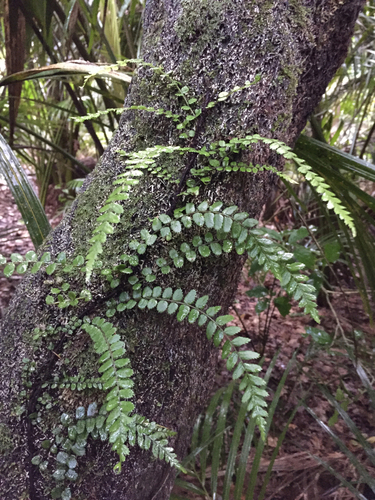
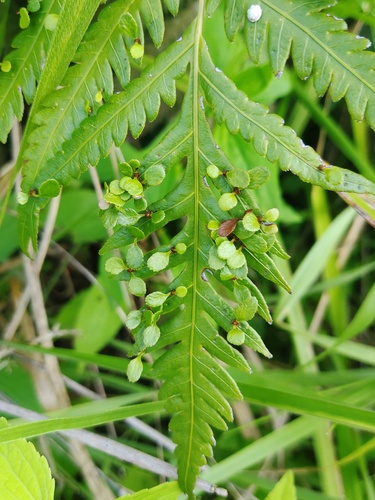
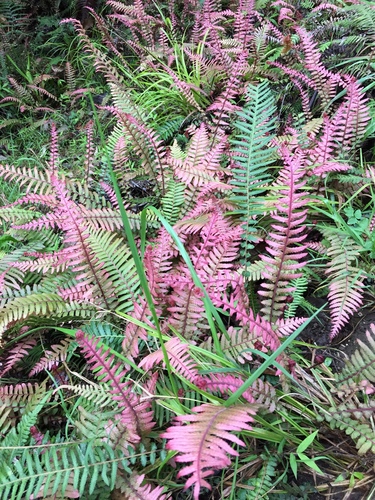
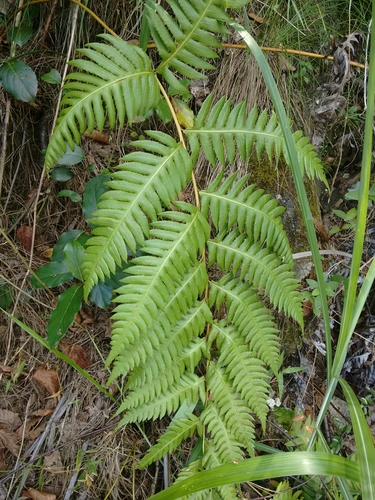
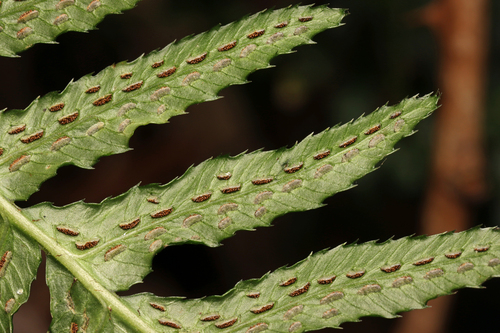
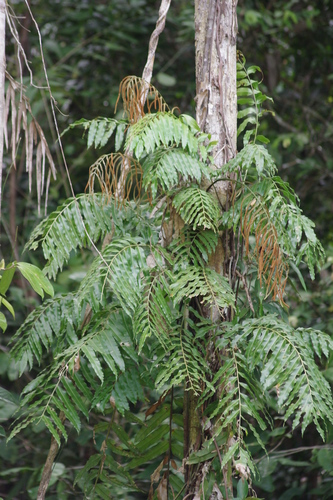
Stenochlaena palustris (Burm.fil.) Bedd. is an edible medicinal fern species, known as choại in Vietnamese and as dilimán or hagnaya in Tagalog. In the folk medicine traditions of India and Malaysia, the leaves of this fern are used as a remedy for fever, skin diseases, ulcers, and stomachache. This plant is a long-climbing fern that bears thin black scales, and its stems can grow up to 20 meters long. It produces pinnate fronds that measure 30–100 cm long, with petioles 7–20 cm long, and ovate lanceolate pinnae that are 10–15 cm long and 1.5–4.5 cm wide. The fern's sporophylls are long and narrow, and have brownish sori on their undersides. Acylated flavonol glycosides isolated from this fern have been found to have antibacterial activities. Crude and partially purified extracts prepared from the fern have been shown to have antifungal, antioxidant, and antiglucosidase activities. Diliman district, a major educational district in Quezon City, Philippines, is named after this fern. Its species epithet palustris is Latin for "of the marsh", which indicates the fern's common habitat.