About Stenocereus thurberi (Engelm.) Buxb.
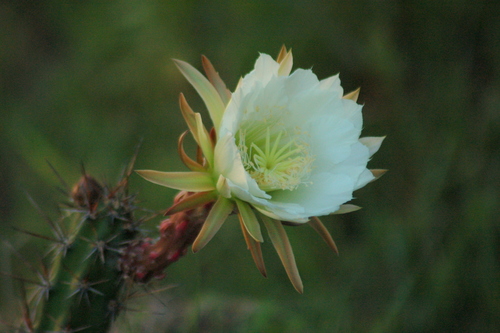
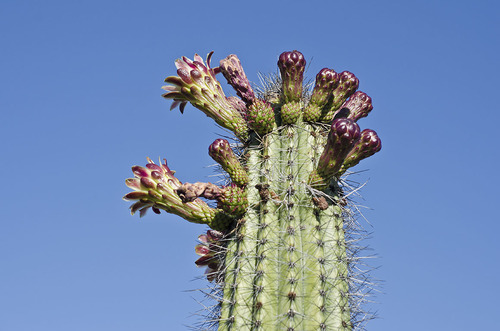
Stenocereus thurberi, commonly called organ pipe cactus, is a columnar cactus species. It develops several narrow vertical stems that grow from a single short trunk just above ground level. Stems are approximately 15 cm (6 inches) thick, and typically reach heights of 5 m (16 feet), though some individuals have been recorded reaching 7 to 8 m (23 to 26 feet). Stems rarely branch; instead, new annual growth emerges from the tip of the previous year's growth. Mature plants can reach a total width of 3.5 m (12 feet). Each stem has 12 to 19 ribs that are 10 mm (3/8 inch) high. These ribs bear dark brown to black spines that fade to gray as the cactus matures. This species takes 150 years to reach full maturity. Mature older plants produce annual 75 mm (3 inch) funnel-shaped white flowers with purple or pink tints. Flowers open at night and close by the following morning, and they typically bloom during the months of April, May, and June. Organ pipe cacti are usually pollinated by bats. After flowering, the plant produces fruit roughly the size of a tennis ball. Under the fruit's spiny outer skin is red flesh, which has been described as tasting better than watermelon. The Seri people have traditionally harvested this fruit, and call the plant ool [oːɬ]; the fruit is also used as a medicine. This species is found primarily in Mexico, concentrated in Sonora, southern Baja California, and northern Sinaloa. It also occurs in the United States, where it is much rarer, with the prominent exception of Organ Pipe Cactus National Monument. The cactus grows predominantly on rocky hillsides at elevations up to 900 m (3,000 feet). It is sensitive to frost, so it is rare in low desert areas that are more prone to frost events. It is a slow-growing species that prefers full sun and well-drained soil. Seedling-stage plants require shade, and grow underneath a "nurse tree" for several years, until they develop an adequate root system. Most of the cactus's root system is located in the upper 10 cm of soil.