About Stenocereus heptagonus (L.) Mottram
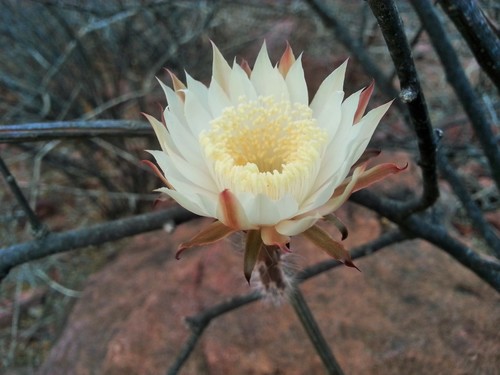
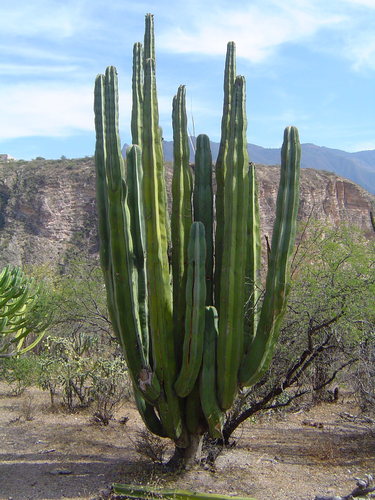
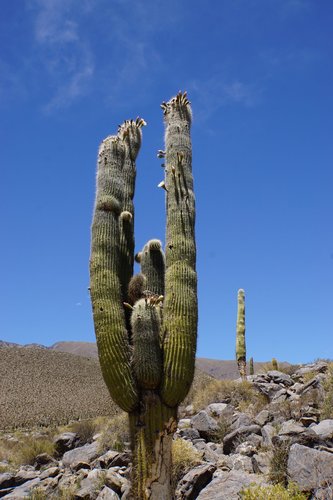
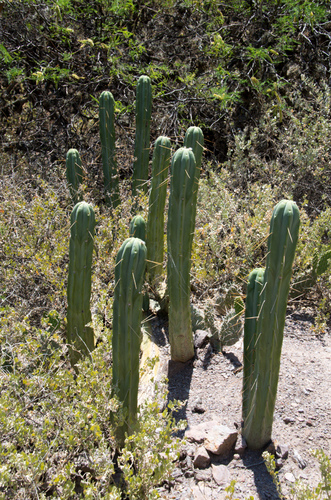
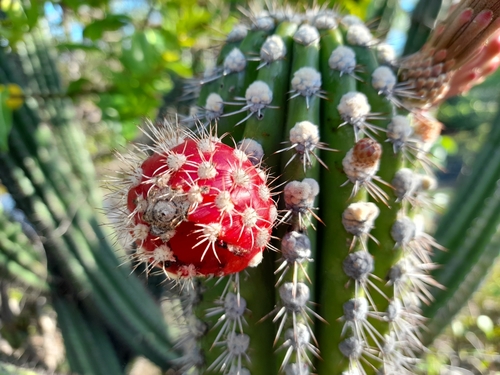
Stenocereus heptagonus is a tree-like cactus that grows with numerous candelabra-shaped branches, reaching a total height of 8 to 12 meters. It develops a clear, distinct trunk, and its upright to slightly spreading shoots can grow up to 30 centimeters in diameter. This species has 9 to 12 sharply defined ribs, each of which reaches a maximum height of 1.5 centimeters. Its spines consist of three gray central spines, where one of the three is longer than the others and can reach up to 4 centimeters in length, plus around 10 grayish peripheral spines. The nocturnal, night-opening flowers of Stenocereus heptagonus measure 7 to 9 centimeters long; they are greenish to faintly purple on the outer surface, and white on the inner surface. Its fruits are spherical, red, and 5 to 6 centimeters in diameter, and they are covered in spines that detach when the fruit is ripe. Ripe fruit has red pulp and contains black seeds. Stenocereus heptagonus is endemic to the West Indies, specifically found across the Greater Antilles, Jamaica, Cuba, Hispaniola (including both the Dominican Republic and Haiti), Puerto Rico (on the islands of Caja de Muertos, Culebra, Desecheo, Magueyes, and Mona), and St. John's in the Virgin Islands. Its flowers are pollinated by three species of bats: Brachyphylla nana, Monophyllus redmani, and Phyllonycteris poeyi. In its native habitat, this cactus grows alongside four other plant species: Bonellia stenophylla, Bourreria succulenta, Guaiacum officinale, and Maytenus loeseneri.