About Stenella attenuata (Gray, 1846)
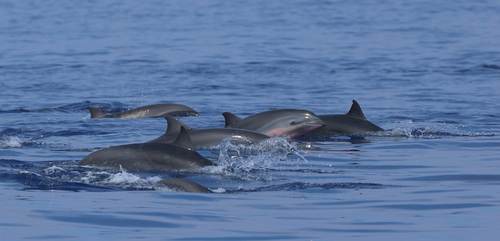
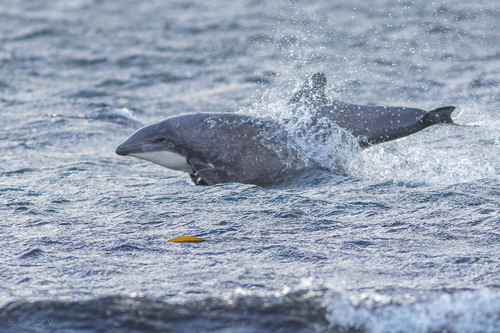
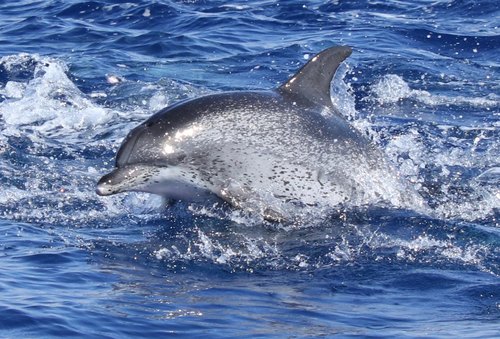
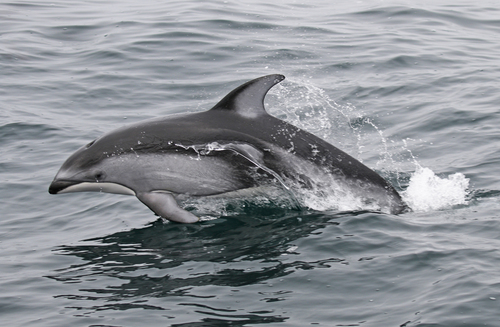
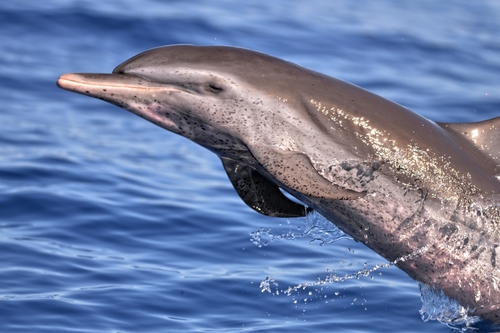
The pantropical spotted dolphin, scientifically named Stenella attenuata (Gray, 1846), shows significant variation in size and coloration across its range. The most distinct split is between coastal and pelagic varieties: the coastal form is larger and has more spots. These two forms have only been classified as separate subspecies in eastern Pacific populations. Spots are a key defining feature of adult pantropical spotted dolphins; immature individuals are generally uniformly colored, and can easily be mistaken for bottlenose dolphins. Even as adults, populations around the Gulf of Mexico may have relatively few to no spots. In the Atlantic, this species can be confused with the Atlantic spotted dolphin. This species is a fairly slender, streamlined animal, with a dark cape and light spots on its body that grow in number and size as the dolphin ages. It has a long, thin beak and a falcate dorsal fin, which is the thinnest of any dolphin. Both the upper and lower jaws are darkly colored, but are separated by thin white "lips". The chin, throat, and belly range from white to pale grey with a small number of spots. The flanks are divided into three distinct color bands: the lightest band at the bottom, a thin grey strip in the middle, and a dark grey back. The tall concave dorsal fin matches this same color pattern, and the thick tail stock matches the color of the middle flank band. The vocal repertoire of the pantropical spotted dolphin has not been clearly documented, and there is no published information about the acoustic signals of South Atlantic Ocean populations of this species. The pantropical spotted dolphin is very active, and often makes large, splashy leaps out of the sea. It commonly breaches, and will often fully clear the water for a second or longer. Bow-riding and other types of play with boats are common behaviors. In the eastern Pacific, this dolphin is often found swimming alongside yellowfin tuna. This association has led to high dolphin death rates from tuna fishing, though the dolphins do not feed on yellowfin tuna. Both species share similar diets of small epipelagic fish. In other regions, the species may also feed on squid and crustaceans. Newborn pantropical spotted dolphins measure 80–90 cm long at birth. Adults are about 2.5 m long and weigh 110 to 140 kg. Females reach sexual maturity at 10 years old, while males reach sexual maturity at 12 years old. The average lifespan of the species is around 40 years. As its common name suggests, the pantropical spotted dolphin is widely distributed across tropical marine waters between 40°N and 40°S, and is one of the most common dolphin species in the Atlantic and Indian oceans. The total global population is over three million, making it the second-most abundant cetacean after the bottlenose dolphin. Two million of these individuals live in the eastern Pacific. However, this total represents a decrease from at least 7 million individuals since the 1950s. The pantropical spotted dolphin is the most common cetacean species observed within the Agoa Sanctuary, located in the Lesser Antilles in the eastern Caribbean. Because it is common within the sanctuary, it is considered a resident species, but no research has been conducted to estimate its population status or movement patterns between islands. The highest population densities are centered in shallow, warm waters with temperatures over 25 °C. The species also tends to concentrate in areas with a high temperature gradient.