About Stegobium paniceum (Linnaeus, 1758)
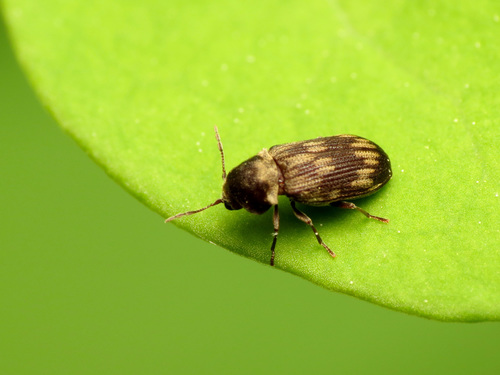
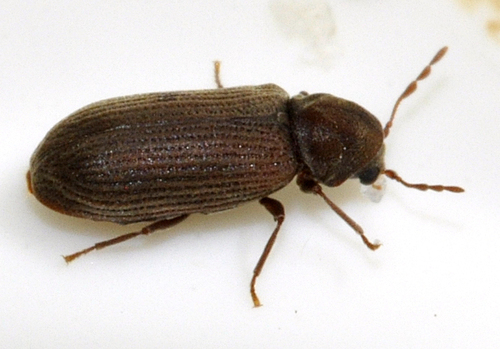
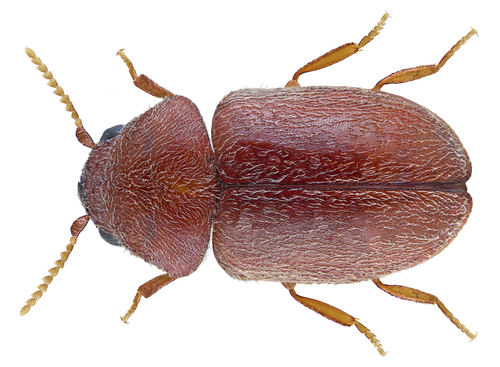
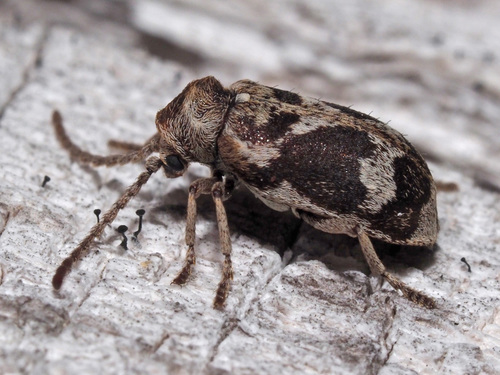
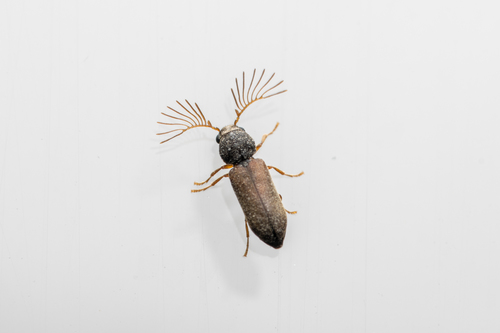
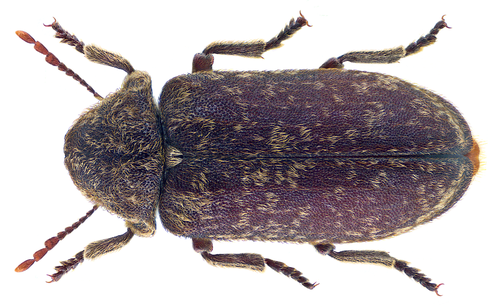
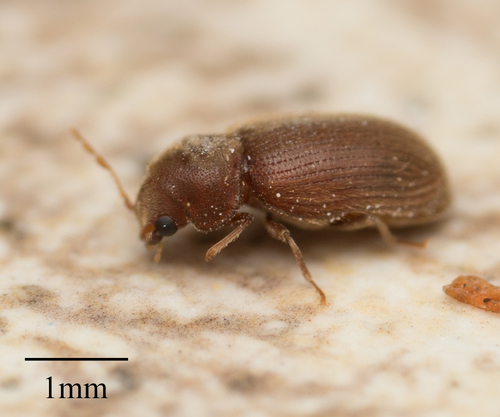
Adult drugstore beetles (Stegobium paniceum) range between 2.5 and 3.5 millimetres (3⁄32 to 1⁄8 inch) in length. They are reddish-brown with a cylindrical body shape. Larvae are habitually curled, and the pupa is proportionally more slender than the pupa of the cigarette beetle. Males and females look nearly identical to the naked eye. The only visible difference between adult sexes is a slot-like sexually dimorphic structure on the tarsal claws of males, which can only be seen under a microscope. During the pupal stage, males and females can be differentiated: female genital papillae bulge outwards and are divergent, while male genital papillae do not protrude and are far less pronounced. Because adult drugstore beetles hold their genitals internally, there is no reliable method to distinguish sexes in live specimens after the pupal stage. Most feeding and damage caused by drugstore beetles occurs during the larval stage. This beetle attacks a very wide variety of food sources, including dried herbs and medicinal plants, which is how it earned its common name. The species feeds on both food and non-food materials. Recorded food items include bread, grain, coffee beans, powdered milk, sweets such as cookies and chocolate, spices, herbs, dried fruit, and seeds, among other materials. Non-food items consumed by drugstore beetles include museum specimens, wool, hair, leather, books, upholstery, and manuscripts. Adult drugstore beetles gnaw through packaging, creating large holes in the material. This activity leads to packaging deterioration, product contamination, and loss of structural integrity of the damaged materials.