About Steganopsis melanogaster (Thomson, 1869)
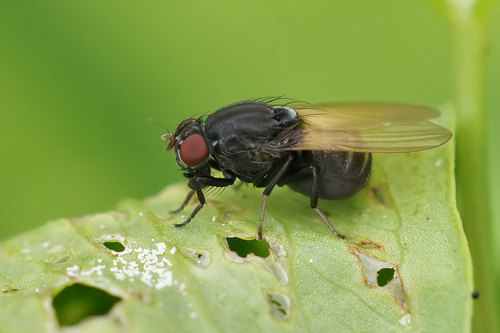
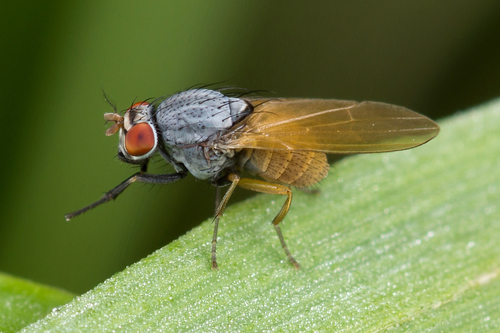
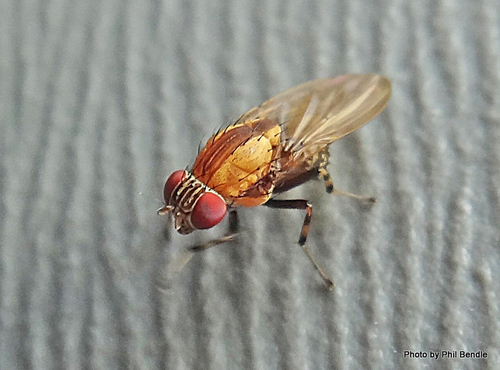
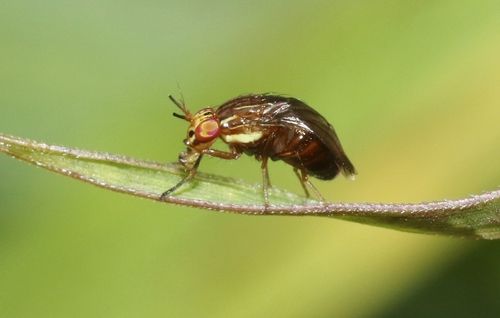
Steganopsis melanogaster is a member of the fly family Lauxaniidae. As a lauxaniid, it has a head with convergent postocellar bristles and no vibrissae; its thorax bears one anepisternal bristle on each side, and the costal vein of its wing is unbroken. This species reaches approximately 3 mm in body length. Its abdomen is mostly glossy black, and its wings are brown except for transparent white tips. The frons of the head is dull yellow, with a large velvety black ocellar mark and brownish marks at the bases of the orbital bristles. Each side of the face has a large violet-black spot. The middle of the fore tibia and the base of the hind femur are darkened. The second wing vein lies close to the costa. The structure of the male hypogium distinguishes this species from the closely related, similar-looking S. convergens. In live individuals, the wings are bent over the tip of the abdomen, which can lead to the fly being mistaken for a small beetle. Adult S. melanogaster have been recorded visiting flowers of Alphitonia excelsa (family Rhamnaceae) and Guioa semiglauca (family Sapindaceae). Like most lauxaniid larvae, the larvae of this species may develop in rotting plant matter.