About Stauropus alternus Walker, 1855
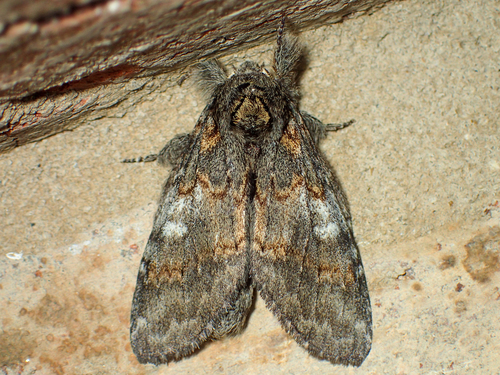
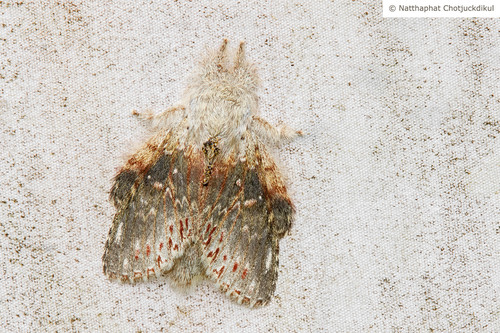
For male Stauropus alternus, the head and thorax are brownish grey. The abdomen is greyish brown, with darker dorsal tufts on its first six segments. The forewings are brownish grey, marked with indistinct, pale, waved antemedial and postmedial lines. The submarginal series bears rusty red spots, each containing pale lunules inside. The hindwings are whitish, with brownish costal and inner areas. Both the forewings and hindwings have a marginal series of pale and reddish-brown lunules. The ventral side of the moth is brown. Females are similar to males, but have uniformly brown hindwings. The larvae are dark reddish brown, with a visible pale dorsal line. Grey subdorsal streaks appear on the fourth and sixth somites. The terminal somite is swollen, carried over the back, and has two angular processes originating near its base. Anal prolegs are absent. The second and third pairs of legs are long. In terms of ecology, the caterpillars feed on species from the genera Ricinus, Careya, Cajanus, Cassia, Ougeinia, Pithecellobium and Wagatea. They are recognized as a pest of pulses, tea, coffee, rambutan and mango. Due to their long legs and habit of rearing up when threatened, these caterpillars are sometimes called crab or lobster caterpillars.