About Stathmopoda skelloni Butler, 1880
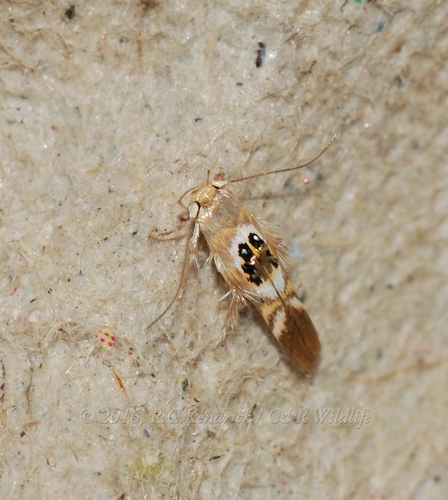
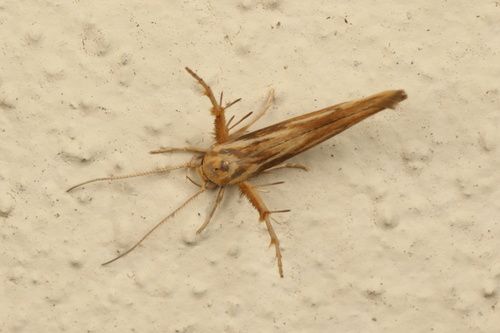
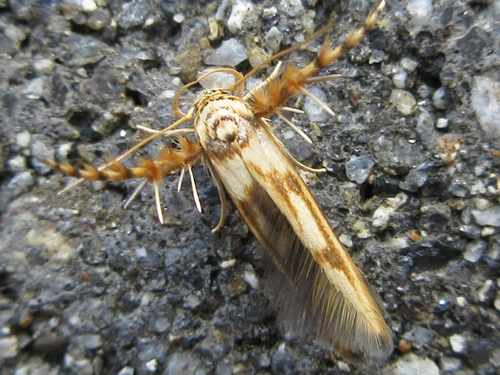
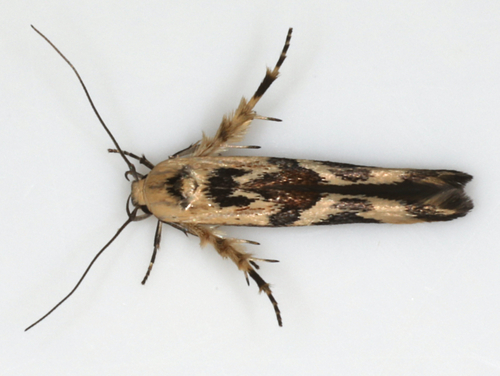
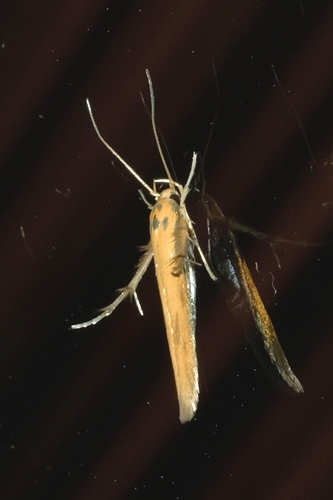
Meyrick provided the following species description for Stathmopoda skelloni: This moth species measures 12-15mm for both male and female individuals. The head, palpi, and antennae are pale whitish-ochreous. The thorax is also whitish-ochreous. The abdomen is pale whitish-ochreous, with a greyish tint. The legs are pale whitish-ochreous; the anterior pair is darkened, and the apex of the posterior tibiae is grey. The forewings are elongate, very narrow, widest near the base, and long-pointed. They are whitish-ochreous, sometimes with a yellowish tint. Markings on the forewings are grey, very variable, and sometimes partially bordered by an ochreous suffusion. Normally there is an elongate spot on the inner margin at 1/3, a second spot beneath the costa in the middle, a third spot in the disc at 2/3, a fourth spot before the apex, and a slender subcostal line running from the second spot to the costa near the apex, but these markings tend to be variously connected and confused. Sometimes there is a streak along the fold, or along the anterior part of the costa. Rarely, there is a dark ochreous-fuscous suffusion towards the base of the inner margin. The cilia are light grey, sometimes with an ochreous tint. The hindwings and their cilia are light grey. This species is endemic to New Zealand, and can be found throughout the country including Taranaki, Wellington, Blenheim, Nelson, Christchurch, Dunedin, Lake Wakatipu and Invercargill. S. skelloni occurs in a range of habitats, including native forest, coastal dunes, shrubland, cultivated gardens, and orchards. The larvae of S. skelloni feed on a variety of native and introduced plants. Recorded food items include dried gorse flowers, seeds and flowers of flax species, raupō seeds, and fruits of lemonwood. Larvae have been reared from dead and dying bracts, flowers, leaves and buds of Actinidia chinensis var. deliciosa (kiwifruit), old flowers and seeds of Calystegia tuguriorum, the seedpods of Phormium tenax, and from flowers of species in the genus Senecio.