About Staphisagria macrosperma Spach
Staphisagria macrosperma Spach, formerly classified as Delphinium staphisagria, is a species in the genus Staphisagria, part of the buttercup family Ranunculaceae. It was previously grouped as a subgenus or section within the genus Delphinium, but molecular evidence supports recognizing Staphisagria as its own separate genus, which forms a sister group to the Aconitum-Delphinium clade.
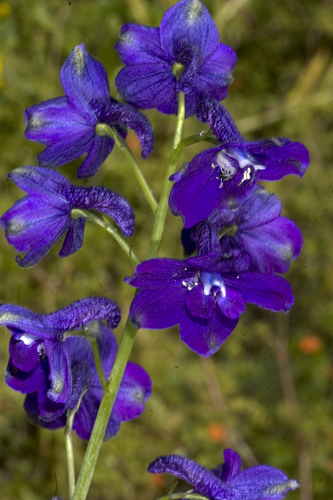
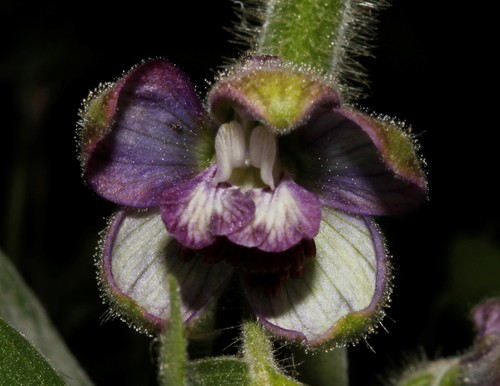
This plant is botanically described as a hairy, stout-stemmed biennial with large palmate leaves that can reach up to 15 cm (6 inches) across. Its flowers range in color from mauve-blue to blue, have short spurs, grow up to 2.5 cm (1 inch) across, and are arranged in racemes. Mature plants reach a total height of 4 to 5 feet. This species grows across the entire Mediterranean region.
All parts of Staphisagria macrosperma are highly toxic, and no amount of the plant should be ingested. Preparations made from this plant, primarily from its seeds, have been used as a pediculicide (a treatment for lice) over the last two thousand years. In her 1931 famous herbal, Maud Grieve refers to this plant, commonly called stavesacre, as a vermifuge that destroys vermin, notes its parasiticidal properties, and also states that it is violently emetic and cathartic.