About Stagmomantis limbata Hahn, 1835
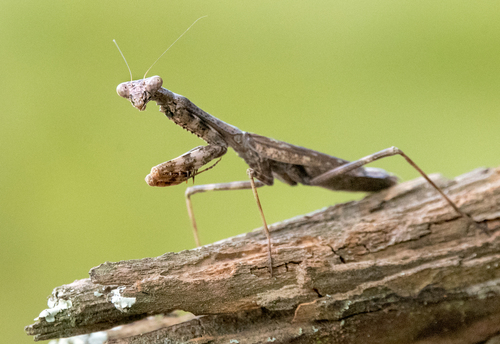
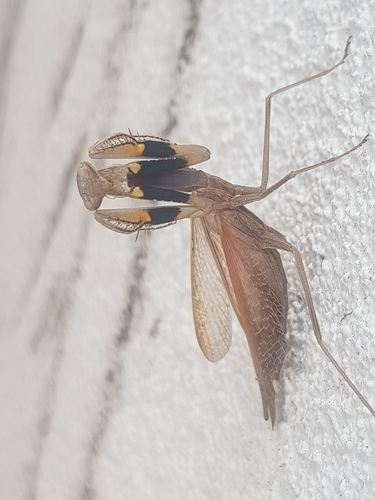
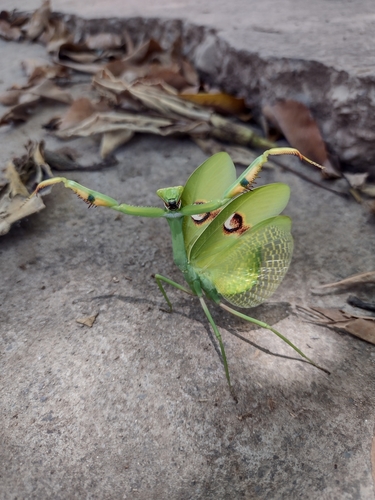
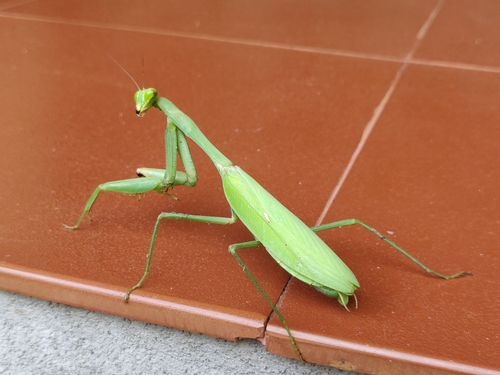
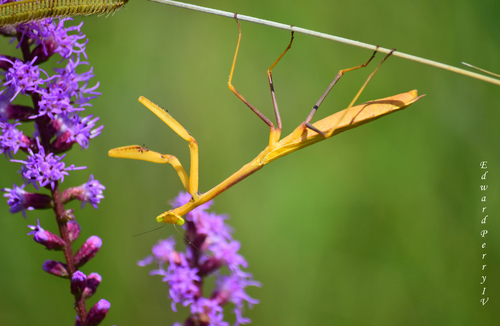
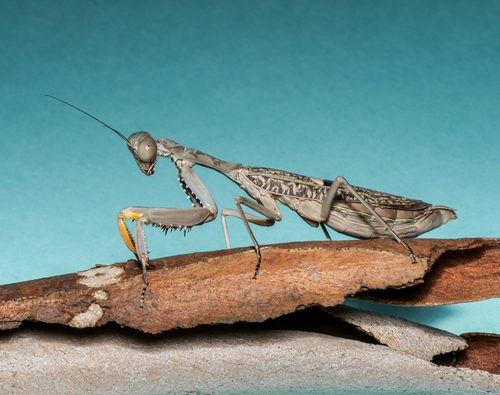
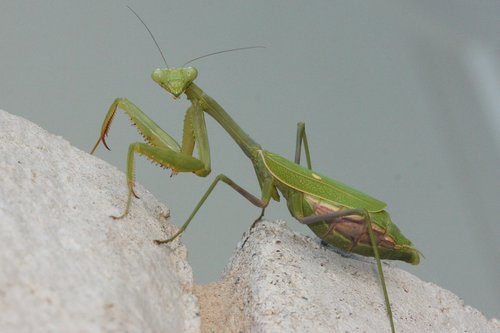
Stagmomantis limbata is one of the largest mantid species native to North America, though it is much smaller than some African and Asian mantids, including species from the genera Sphodromantis and Hierodula. Like other species in the Stagmomantis genus, its facial plate, which sits below and between its antennae, is about twice as wide as it is long. Its eyes are not as protruding as those of the Carolina Mantid. Most females are fairly plain green, often with a yellowish abdomen, but they can sometimes be gray or light brown. Females have a dark spot in the middle of their tegmina, which do not completely cover their wide abdomens. Their hind wings may be checkered or striped yellow. Males are slender and long-winged, with highly variable coloration. Most males are green and brown, with green sides to their folded tegmina and brownish tops; they may also be solid gray, solid brown, solid green, or any combination of these colors. Males do not have prominent dark spots on the top of their abdomen. Their wings are transparent, usually with cloudy brownish spots on the outer half. This species occupies a diverse range of habitats. It is often found in open semi-arid areas in tall forbs, shrubs, or trees, but it is more abundant in lusher areas, including riparian and wooded zones along streamsides, roadsides, and canyons, as well as in human towns. Its range extends from Texas to Southern California, north into Colorado and Utah, and south into Mexico.