About Stagmomantis californica Rehn & Hebard, 1909
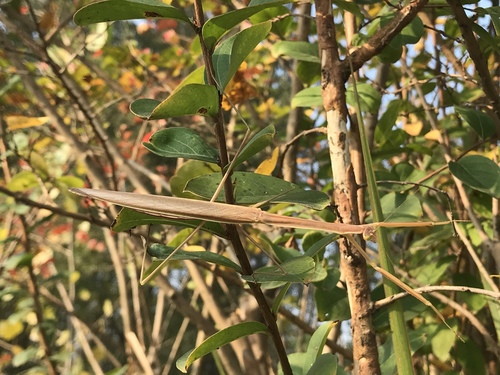
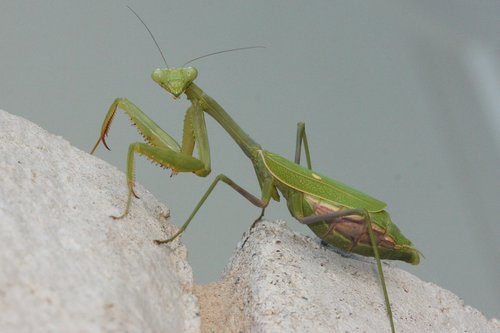
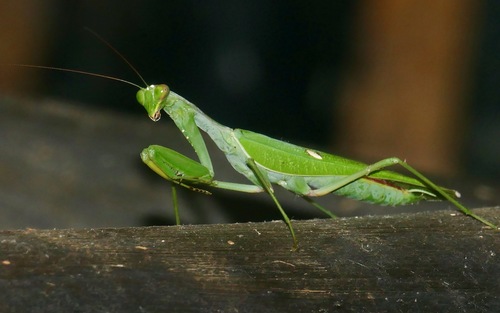
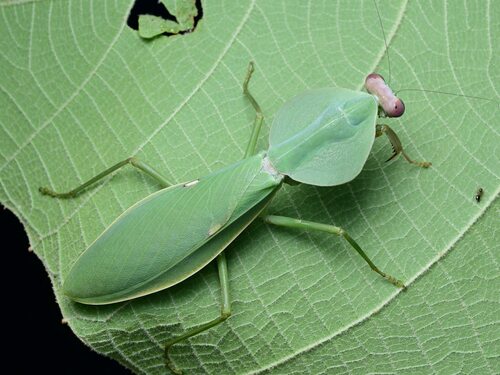
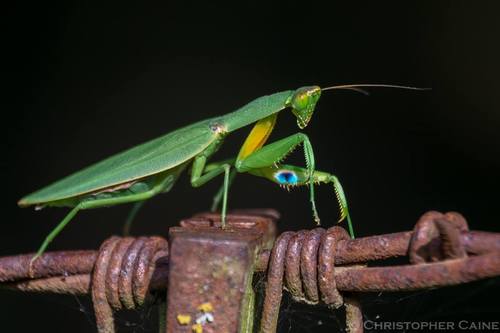
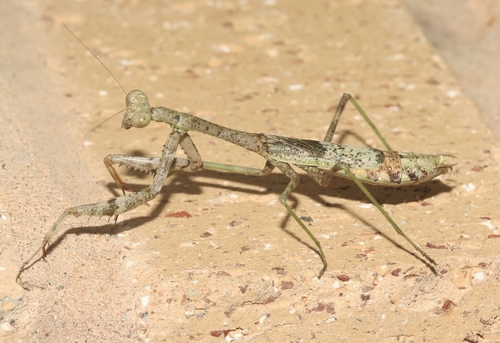
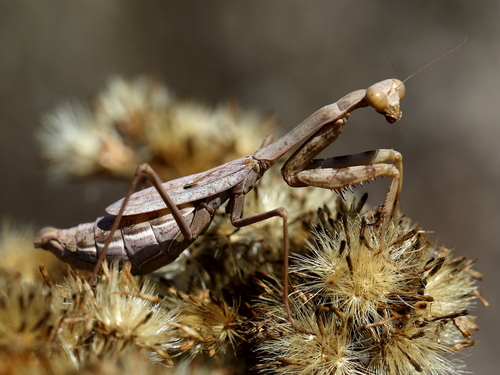
The scientific name of this species is Stagmomantis californica Rehn & Hebard, 1909. Adult individuals have a body length ranging from 2 to 3 inches. This species has green, yellow, and brown color varieties. Subadult and adult individuals typically have dark transverse bands on the upper surface of the abdomen. The wings of both sexes are mottled or suffused with dark brown or black, and the hindwings are purplish. The inner forelegs are orangish, and there are small black spots near the mandibles. In most other physical characteristics, this species closely resembles other mantids; two other species from the same genus are native to California: the slightly smaller Stagmomantis carolina, and the larger, more common Stagmomantis limbata. The oothecae and hatchlings of this species differ from those of S. limbata. Within California, this common insect is found throughout warmer, drier regions of the southern part of the state, at elevations below 10,000 feet. It prefers chaparral and desert environments with enough vegetation to climb, hide, and hunt, with creosote bush being a particularly favored habitat. Its overall range extends from all of southern California north into the Central Valley, then east into Arizona, New Mexico, Colorado, and western Texas, and also reaches into Mexico. In the late 1980s, this species began appearing in southern Idaho, and appears to be migrating northward, adapting to colder winters along the way. Like all mantids, the California mantis is carnivorous, and eats almost any other insect it recognizes as small enough to consume, including other members of its own species. Males and females only gather to reproduce, and adult individuals are strictly solitary otherwise. Nymphs hatch in spring from hard egg cases that were laid the previous fall. Adults do not overwinter; the species' lifespan is rarely more than one year and usually less than nine months. Females sometimes survive longer into winter than males, which is thought to give them more time to lay their oothecae on suitable vegetation or rocks before dying. Both sexes are fast runners, have fully formed wings, and are capable of flight, though flight is energy intensive and rarely used. Males are particularly capable fliers: the male's wings extend well past the end of the abdomen, while the female's wings extend no more than half that distance. Males are often attracted to bright lights at night, and can sometimes be found swarming around these lights alongside other insects. As ambush hunters, they fly at night primarily for dispersal, not to search for food. Individuals swarming around lights are disoriented, behaving as though the artificial light is the moon and attempting to maintain a straight flight path. When Stagmomantis wheelerii mate, the mounting process can last for hours. Often during or after mating, female S. wheelerii eat their male partners, which provides the female with enough protein to produce an ootheca. All S. wheelerii have sensors near their legs that allow the praying mantis to continue functioning even after losing its head.