About Squatina australis Regan, 1906
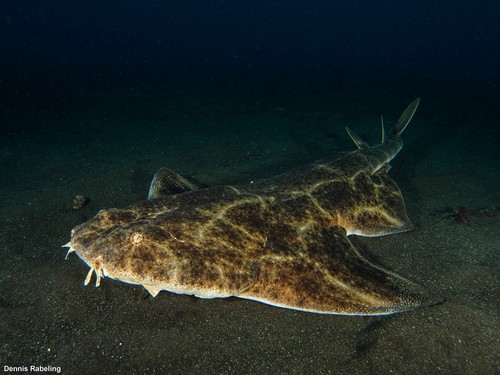
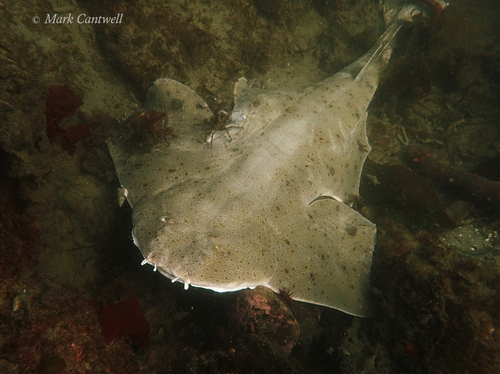
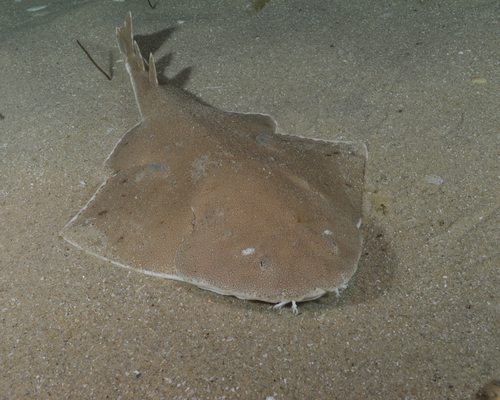
The Australian angelshark, Squatina australis Regan, 1906, has a broad, vertically compressed body and large triangular pectoral fins with free trailing flaps. Its snout holds fringed barbels next to the nostrils, plus a pair of spiracles. Each spiracle is positioned at a distance from the eye that is roughly one and a half times the eye's diameter. This species has two small dorsal fins set far back on the body, and a small tail fin. It reaches a maximum total length of about 152 centimetres (60 in), and lacks large eyespots on its body. Males reach full sexual maturity at a total length of around 800 millimetres (31 in).
This angelshark is native to the continental shelf of southern Australia, where it occurs along the coasts of Western Australia, South Australia, Victoria, Tasmania, and New South Wales. It can be found at depths down to approximately 130 metres (430 ft). It typically inhabits sandy or muddy seabeds and seagrass meadows, and is often found close to rocky reefs.