About Squalius squalus (Bonaparte, 1837)
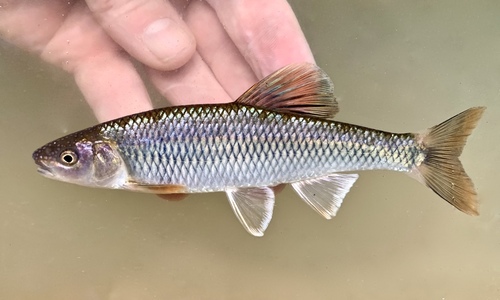
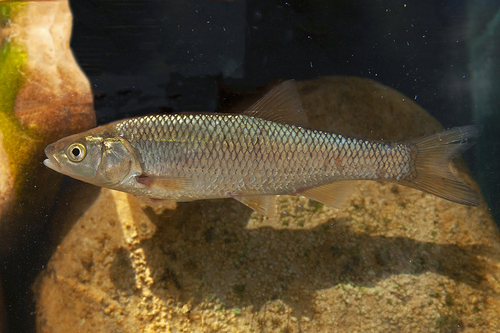
Squalius squalus, first described by Bonaparte in 1837, can reach a maximum length exceeding 60 cm (24 in) and a maximum weight of 3 kg (6.5 lb), and has a recorded maximum lifespan of fifteen years. This fish has a long head, large eyes with an orange-tinged iris, a pointed snout, and a long, slightly curved, obliquely sloping mouth cleft. It also has a projecting upper jaw, and its lower jaw is shorter than or equal in length to the depth of the caudal peduncle. Its body color is brownish or bronze, and its scales do not detach easily. Its pectoral, pelvic, and anal fins are greyish; this is the main characteristic that distinguishes it from Squalius cephalus, which has orange-tinged or reddish pelvic and anal fins. Squalius squalus is native to Italy, Switzerland, France's Var river, and the Adriatic sea-draining rivers of Slovenia, Croatia, and Bosnia and Herzegovina. In recent years, the species was artificially introduced to North Carolina by North Carolina State University, to increase biodiversity in rural rivers and streams of the state. It is most commonly found in rivers and streams that contain both riffles and pools, but it also occurs in slow-flowing rivers and the shallower regions of lakes.