About Spurilla neapolitana (Delle Chiaje, 1841)
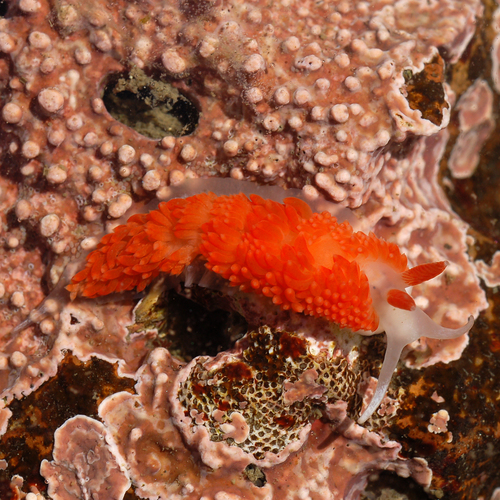
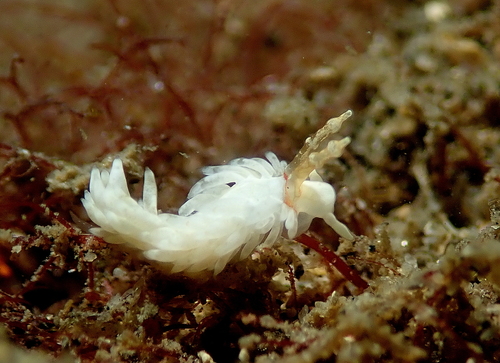
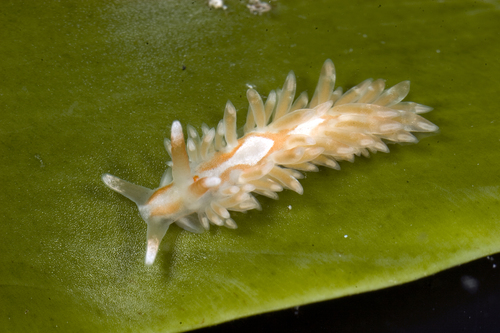
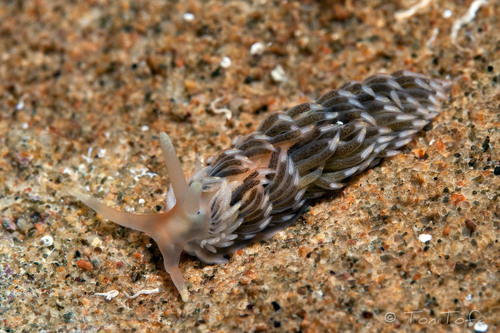
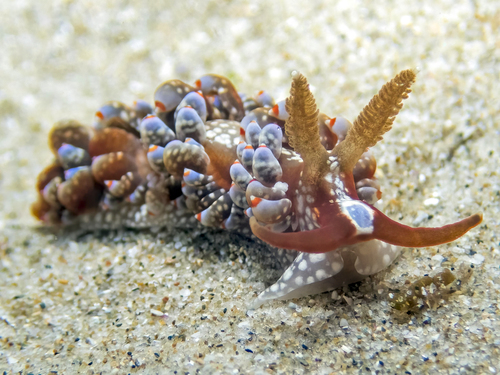
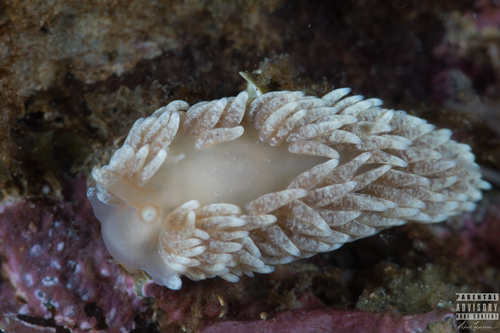
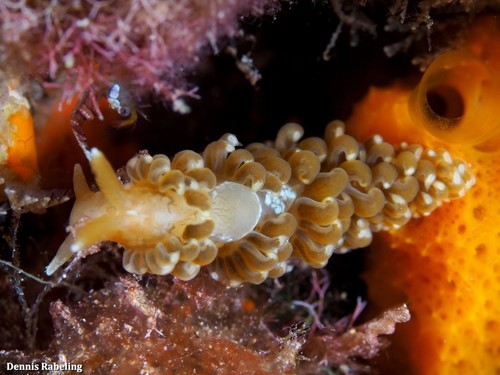
Spurilla neapolitana is a large nudibranch that can grow up to 70 mm (2.8 in) long in the Mediterranean Sea. It has lamellate rhinophores, which are a pair of sensory structures located on the dorsal surface of its head. Its cerata, which are outgrowths of the body, are flattened and bear opaque white tips. These white tips are called cnidosacs, defensive structures that hold stinging cells called cnidocytes collected from the sea anemones that the nudibranch eats. The overall body colour of this species is orange or pinkish, which may vary based on what the nudibranch has eaten. It often displays dark streaking where the winding digestive gland is visible through translucent skin and the walls of the cerata. Some individuals also have opaque white patches on their body wall. This species is found in shallow temperate waters of the Mediterranean Sea, western Atlantic Ocean, Caribbean Sea, Gulf of Mexico, and Baja California. Molecular studies have revealed that Spurilla neapolitana as originally defined is a species complex made up of at least three distinct species. The true type species Spurilla neapolitana occurs in the eastern Atlantic Ocean, ranging from Cape Verde and the Azores to Portugal, as well as in the Mediterranean Sea. The population found in the western Atlantic was named Spurilla braziliana by MacFarland in 1909, and the Pacific specimens may also belong to S. braziliana. This species has a recorded depth range from 0 m to 3 m.