About Sporophila americana (J.F.Gmelin, 1789)
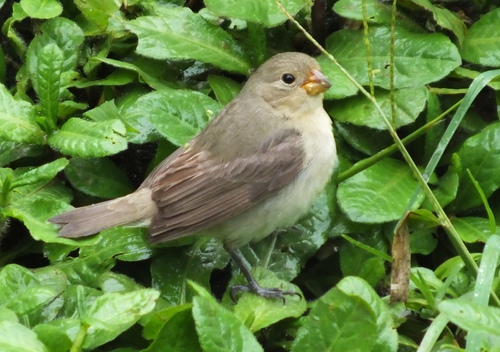
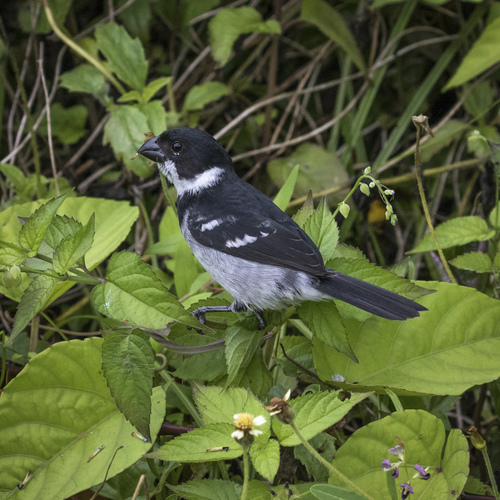
Sporophila americana (first described by J.F. Gmelin in 1789) has a total length of approximately 11 cm, or 4 and 1/4 inches. Adult males have a relatively heavy black bill. Their upperparts are black, with the exception of a greyish rump that is actually white with fine black streaks, a pattern only visible when viewed up close, and two distinct white wing-bars, where the lower bar is often reduced in size. Their underparts are white, apart from a broad black pectoral collar that is sometimes reduced and incomplete, and blackish mottling on the upper flanks. Females are far duller than males: they have a brownish bill, dull buffy-olive upperparts, and pale olive-ochre underparts. Juveniles closely resemble adult females. In terms of ecology, this species occurs in open or semi-open grassy areas and shrublands, where it is typically found in pairs or small flocks. Like other Sporophila seedeaters, it feeds mainly on seeds, but has also been observed eating flowers, buds, and fruits. The species remains fairly common in Suriname, French Guiana, and parts of Brazil, so BirdLife International and the IUCN classify it as a species of least concern. It is rare to uncommon in Venezuela and Guyana, where it is threatened by trapping for the wild bird trade.