About Sporobolus michauxianus (Hitchc.) P.M.Peterson & Saarela
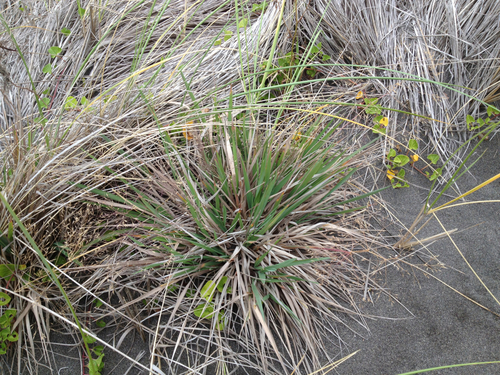
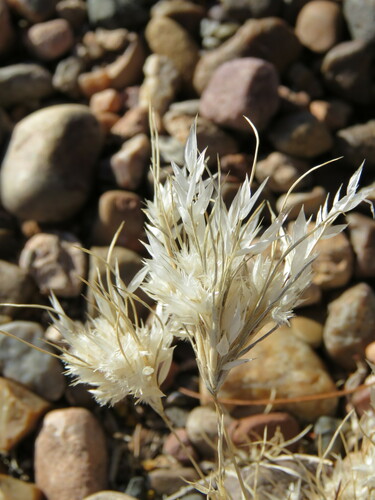
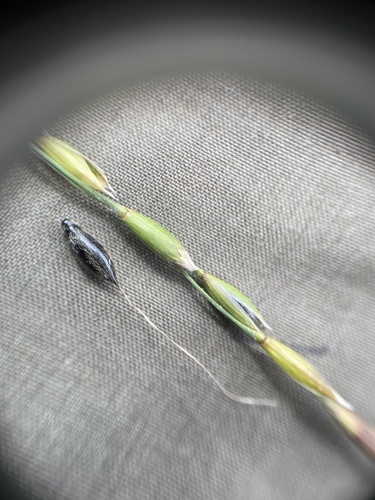
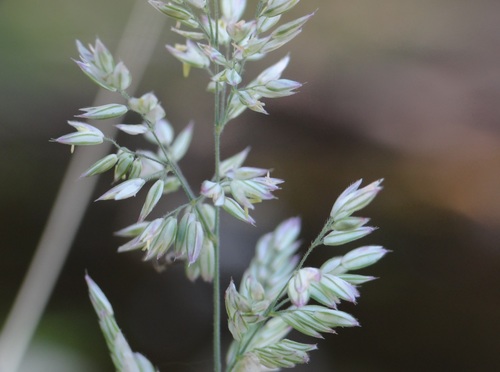
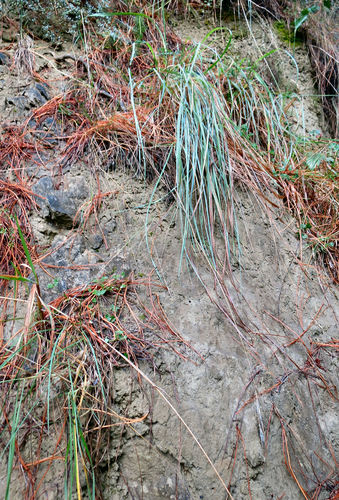
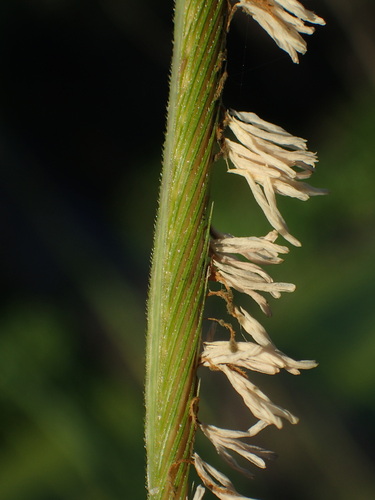
This grass species has hard, sturdy, hollow stems that can grow up to 3 m (9.8 ft) tall. It grows from a network of woody rhizomes and tough roots that form a sod, with roots reaching more than 3 m (9.8 ft) deep into the soil. Its leaves have sharp, serrated edges. The panicle can be up to 50 cm (20 in) long and may bear many branches, and each spikelet grows up to 2.5 cm (0.98 in) in length. This grass spreads via its rhizomes, forming large monotypic stands. DNA-based phylogenetic studies have sparked ongoing debate about reclassifying the taxon from Spartina to Sporobolus. The issue remains unresolved: some groups have adopted the new name, prioritizing it over the historically accepted name Spartina, while multiple publications argue that Spartina should retain taxonomic precedence over the subjective name change to Sporobolus. This species grows in a range of habitat types, and is classified as a facultative wetland species that occurs most often in wet habitats such as fens, wet prairies, rivers, floodplains, ponds, moraines, and marshes. It is tolerant of water, but cannot withstand prolonged flooding. Its dense root system stabilizes soil, even in areas prone to erosion by flowing water. The larvae of Photedes inops feed and develop on Sporobolus michauxianus, apparently exclusively. Livestock may graze on this plant when it is young, but mature plants become very coarse and unpalatable. This species has been studied as a potential source of biofuel. When sown together with Virginia wildrye, prairie cordgrass (this species) has shown promising results in competing with the vigorous invasive plant Japanese knotweed.