About Sporobolus heterolepis (A.Gray) A.Gray
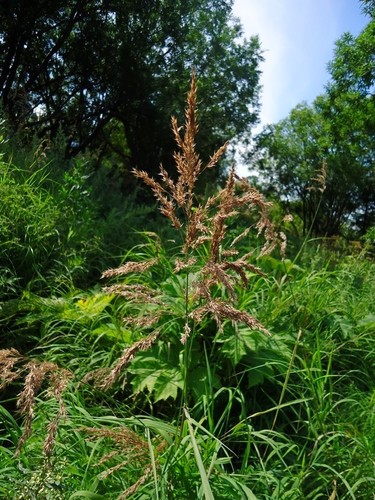
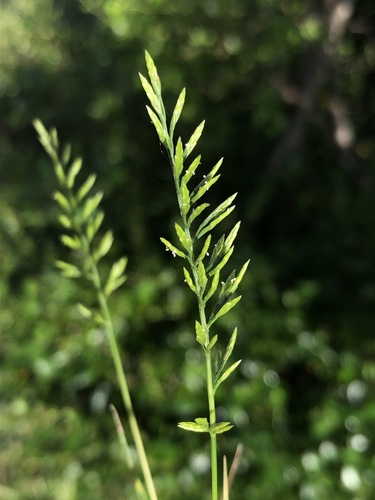
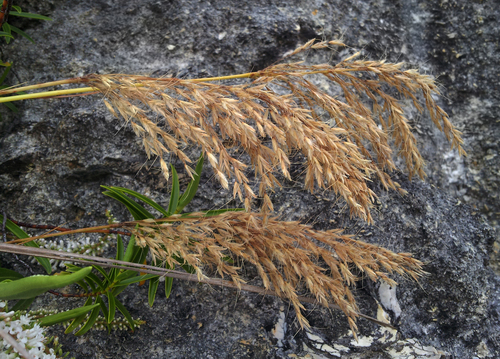
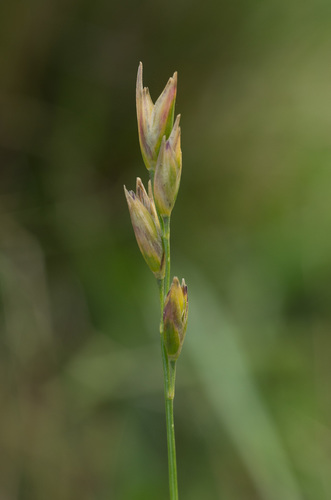
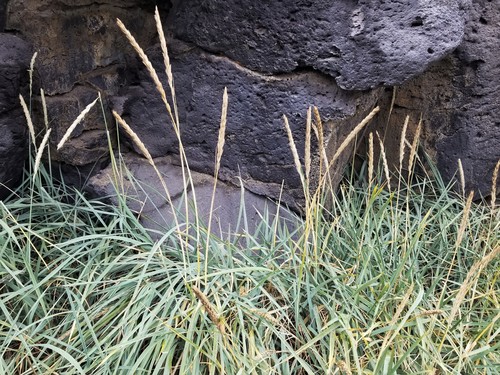
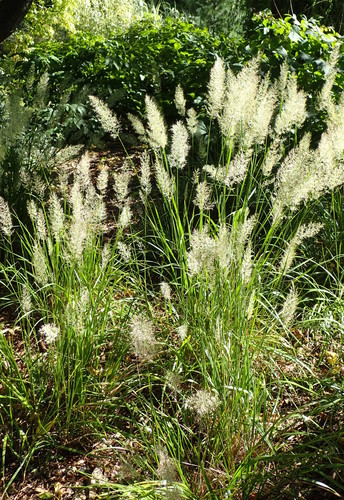
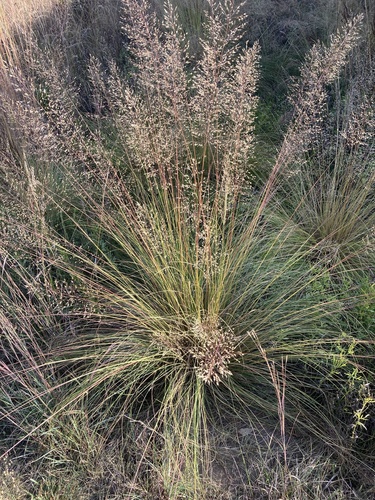
Prairie dropseed (Sporobolus heterolepis) is a perennial bunchgrass. It forms a leaf mound that is typically 1 to 2 feet (30 to 60 cm) high and 2 to 3 feet (60 to 90 cm) across. Its flowering stems, called culms, grow 1.5 to 3 feet (45 to 90 cm) tall, extending above the leaf mound. The inflorescence is an airy panicle 3 to 8 inches (8 to 20 cm) long with many branches, which end in small spikelets. Each spikelet holds a single fertile floret. When blooming, the floret has three reddish anthers and a short feathery stigma. If pollinated, the floret produces a nearly round seed 1.5 to 2.0 mm (0.06 to 0.08 in) long. At the base of the spikelet are two bracts called glumes: one is 4 to 6 mm (0.16 to 0.24 in) long, and the other is 2 to 4 mm (0.08 to 0.16 in) long. Both glumes are long, tapered, and have sharply pointed tips. Around the floret are a lemma and a palea, each 3.5 to 5.5 mm (0.14 to 0.22 in) long, though the palea is sometimes longer than the lemma. Prairie dropseed is a fine-textured grass with long, narrow leaves that arch outward to form attractive, round tufts. The leaves are a rich green in summer, turning to a golden rust color in fall. Its foliage is resilient enough to resist flattening by snow, so it provides year-round visual interest. It blooms from late July to mid-September, producing rusty-tan flowers on stems that reach 30 to 36 inches (760 to 910 mm) in height. It grows in a wide range of soils, and performs well in moist to dry conditions. It is much less common in wetlands. In ecology, it is a larval host plant to the Poweshiek skipper. This grass is cultivated as an ornamental plant for gardens due to its attractive bunchgrass form. Thanks to its drought tolerance, it has been used on green roofs. Its seedheads are sometimes described as having a faint scent similar to fresh popcorn, cilantro, or sunflower seeds. Prairie dropseed is also used for roadside revegetation and prairie restoration projects. It is difficult to establish via direct seeding; transplanting greenhouse-grown seedlings is a more effective method to establish it. Native Americans ground its seeds to make flour, and many bird species eat the seeds.