About Spodoptera littoralis (Boisduval, 1833)
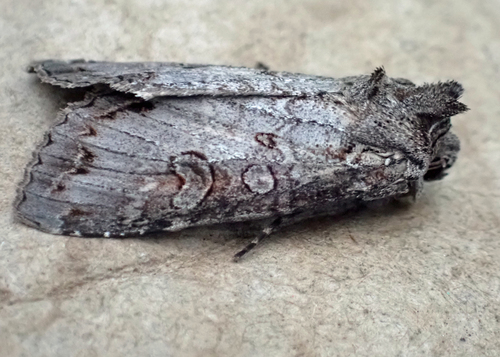
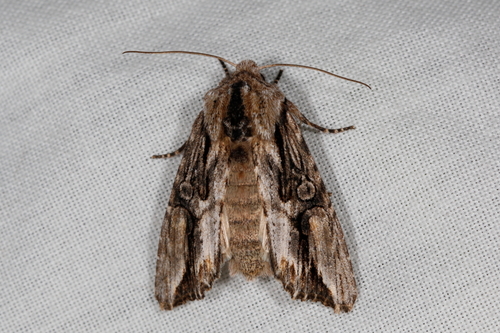
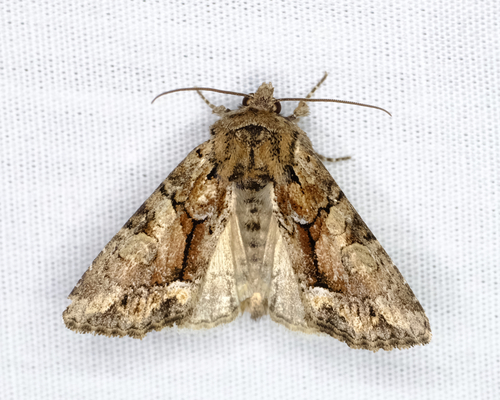
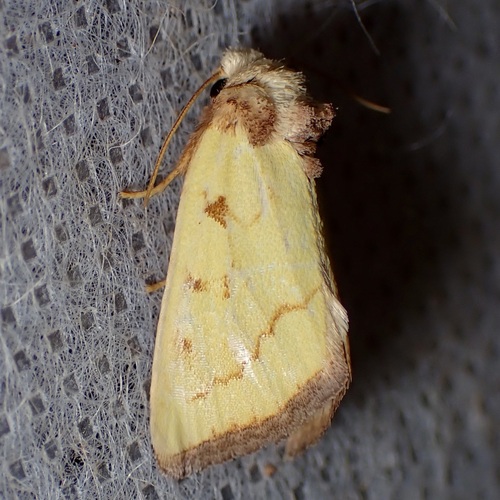
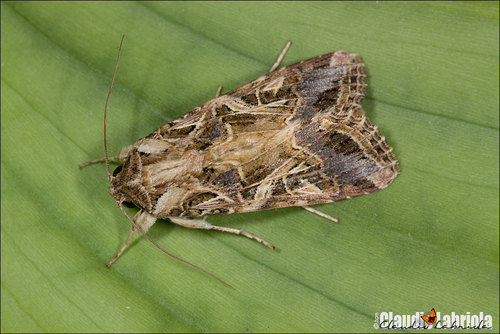
Adult Spodoptera littoralis moths have a body length of 15 to 20 mm and a wingspan of 30 to 38 mm. Their forewings are grey-brown, with an ocellus formed by white oblique lines. Their hindwings are typically much paler and have grey-colored margins.
Copulation is the sexual behavior observed in this species. Most adult moths mate on the same day they emerge from pupation, and copulation lasts between 20 minutes and two hours. Research shows the age difference between male and female moths plays a key role in determining reproductive capacity, adult lifespan, and egg quality. A four-day age difference between partners produced the highest egg fertility: when a four-day-old male mated with a newly emerged female, egg fertility was high. However, females laid the greatest number of eggs when they mated with males that were one day older than them.
Commonly called the African cotton leafworm, this species is native to Africa and occurs across most regions of Middle Eastern countries including Israel, Syria, and Turkey. Its native habitat corresponds to EUNIS code F5, covering semi-arid and subtropical habitats in pre-Saharan Africa. It has also been recorded in Southern and Mediterranean Europe, primarily in Spain, France, Italy, and Greece. Because the African cotton leafworm is sensitive to cold weather, its natural range is restricted in northern European regions such as the United Kingdom. The optimal temperature for its reproductive potential is around 25 °C, so areas with lower winter temperatures or fluctuating temperatures have very limited distribution of this species. Studies have found that temperatures above 40 °C or below 13 °C increase mortality; the combination of high temperature and low humidity is also harmful to the species survival. As a result, S. littoralis lives in regions with rare temperature fluctuation, where it feeds on a variety of host plants, females lay eggs, and larvae primarily develop. The species spreads mainly through trade, when eggs or larvae cling to imported ornamentals or crops. Adult moths can also be dispersed by wind, carried by other species, or spread through their own flight.
Spodoptera littoralis is polyphagous. The host plant range of its larvae covers over 40 different plant families and at least 87 different plant species. It is a known pest of several economically important crops, including Ipomoea batatas (sweet potato), Solanum lycopersicum (tomato), Zea mays (maize), Triticum aestivum (wheat), Capsicum (peppers), Chloris gayana (Rhodes grass), and Hibiscus mutabilis (cottonrose). Larvae prefer to feed on young leaves, young shoots, stalks, bolls, buds, and fruits. Some recorded host plants affect larval growth: for example, larvae that fed on castor oil leaves had shorter larval and pupal development durations, while these durations were longer for larvae that fed on sweet potato leaves.